Tuesday, April 27, 2010

Yasujiro Ozu


(originally published in The Outreach Connection in August 2008)

I first read about Yasujiro Ozu long before I had any hope of seeing his films. I liked the director Paul Schrader, and I was aware that Schrader had written a book called Transcendental Style In Film: Ozu, Bresson, Dreyer. I haven’t read the book to this day, and I don’t think it’s very highly regarded now, but I found it fascinating that Taxi Driver and American Gigolo could spring from the same mind that venerated a Japanese “transcendental style.” But this was in a pre-DVD age, and the films were completely inaccessible to me.

Forgetting Late Spring

I haven’t gone back through my notes to recall when I finally saw my first Ozu film, but something interesting happened a few years ago – I went to see Late Spring for the first time at the Cinematheque, enjoyed and admired it but not overwhelming so, but only towards the very end started to experience a strong feeling of déjà vu. I consulted my records and found out I’d seen it before, and most astonishingly, only a few years before (also at the Cinematheque). This is very unusual for me – usually I’d have remembered the fact of having seen it even if I hadn’t retained any of the substance. Late Spring must surely be the best film I’ve ever forgotten all about.

Well, after that I started watching Ozu’s films fairly regularly, and by now I might even say I would rather watch one of his on a given night than anyone else’s. One of my great movie joys is in now having fourteen of them on DVD, which I believe is everything that’s available without getting into the multi-region player thing. But I’m not sure I’ve ever mentioned him in this column, other than in passing, whereas I’ve mentioned Schrader, to use the same example, probably a dozen times (even leaving aside actually reviewing his films). Because, when you come down to it, I’m not that elevated a thinker. Now, as it happens, most of what I’m writing about isn’t that elevated an art either. So like anyone else, I evolve my quirks and reference points and just hope it means something to someone. But it would be facetious to use Ozu as a reference point for all but a tiny portion of contemporary cinema.

That statement, though, risks perpetuating the continuing myth that Ozu is “difficult.” The truth is, “transcendental style” increasingly seems to me if not a wrong label, certainly not a helpful one, and I now think the mystification of Ozu helped crush my initial sense of him, thus contributing to my inability to process Late Spring. I’m sure other potential devotees remain equally misled. If you’ve heard anything about him at all, it’s probably something like this: he made small-scale family dramas, often using the same themes if not the same plots, the same actors, and virtually the same titles (Early Spring, Late Spring, Early Summer, etc.); he almost never moved the camera, which he generally kept close to the ground. Only one or two of his movies fails to contain at least one shot of a train. He regularly connects one scene to the next through the most mundane sights, such as clothes hanging outside to dry.

Changing Times

I have no space here (and insufficient ability) to even start on an explanation of why these unprepossessing raw elements constitute one of the most enchanting, overwhelming and instructive bodies of work in cinema. For that I might best refer you to Robin Wood’s essay in Sexual Politics and Narrative Film. But even more than that to the films themselves – and really, all I want to do this week is to persuade you -any one of you would justify the effort – to rent or buy or borrow one of Ozu’s films (the most famous, and indeed perhaps the easiest point of entry, is Tokyo Story, increasingly commonly cited as one of the best films ever made.)

Ozu’s career goes back to the silent era, but his richest period, encompassing the most readily available films, starts in the late 40’s and stretches through the next decade (he died in 1962). World War Two and the bombing of Hiroshima are seldom mentioned in the films, but inevitably lurk in the background. The society is ordered and steeped in tradition. The men go off to work, mostly in anonymous offices; the women mainly stay at home. However, times are changing: Western and traditional dress intermingle, stars like Gary Cooper and Audrey Hepburn are mentioned from time to time. Transcendental or not, Ozu’s films could hardly be more precisely grounded, and the consistency of his themes means you can virtually chart the changing society from one film to the next.

In particular, he continuously reexamines the shifting expectations of the sexes for themselves and each other and the world around them. Marriage is the most common theme, as an institution that keeps reasserting itself and trapping successive generations, even as all involved sense its limitations. In the most famous example, Late Spring, a father essentially manipulates his stay-at-home daughter into a marriage, even though it only renders him lonely and her unhappy. Ozu’s most scintillating recurring character, embodied by actress Setsuko Hara, is a woman (often a widow) who chooses to resist this momentum. In Early Summer, in a neat reversal, she mystifies everyone (including the future groom) by suddenly deciding to marry someone who’s never even courted her, perhaps the subtlest (and of course self-defeating) of protests. Often, the woman disappears from the film after the wedding takes place, as if nothing more could be said about her.

Equinox Flower

These are wonderful stories, especially once you get to know Ozu a little. His films feel very even, non-judgmental, which is not the same as being passive. He exposes through sorrow rather than anger. But they’re also wonderfully funny at times. In the one I rewatched most recently, Equinox Flower (his first in colour), a father who publicly espouses romantic self-determination and a progressive view of female choice is much less able to apply those standards to his own daughter. It’s not Ozu’s best – it doesn’t flow and cohere as naturally as some others – but there’s a wonderful deadpan comedy to the father’s escalating powerlessness (actually, “deadpan” is a term that takes on a whole new meaning when considered relative to Ozu).

As in all his works, it’s all the richer for its proximity to tragedy. The gains of some generations confirm the losses of those that went before; people register small victories at the cost of much loneliness, repetition, distance. It’s tempting to see this as less wrenching in Japan than here – so much time, it appears, spent transcendentally meditating – but Ozu’s restraint shouldn’t be taken as a denial of real pain. His work is extremely specific, but – once you throw off your misconceptions – moving and comprehensible and, above all, continuingly relevant. Discover him tonight.

Saturday, April 24, 2010

Hi Mom!


I was going to write about the South Korean film Mother, which may be the most generally praised of the films currently playing. But you know, now I approach the task, I don’t really have enough to say about it. I enjoyed watching it, and it’s full of fine moments, so, uh, there you are. Want me to elaborate? Well all right, since you twist my arm, I liked the bit where the mother (amateur sleuthing to prove her son didn’t commit the murder he’s being held for) has to hide in a closet while a couple make love; when they fall asleep afterwards, she tiptoes out, holding what she thinks is an incriminating blood-spattered golf club (which later turns out to be lipstick), and on her way to the door knocks over a bottle of water…we see the water spread slowly toward the man’s fingers, and then actually onto his fingers…

Mother

…and then there’s a cut to the outside, where we see her emerge with relief, shortly thereafter scurrying away as she hears the man getting up and coming to the door as well. What I like is the choice of where to cut. The more conventional approach would be to stay inside the room, showing us exactly how the mother’s escape synchronizes with his waking up. But who needs that? The scene’s not going to get any better, and the edit brings it a surprising, quirky energy. The film is full of things like this.

But they never amount to much more than the sum of their parts. Ultimately the narrative only adds another exhibit to the long line of movie mothers whose faith in their sons drives them into irrationality. It engineers some good twists, but in today’s cinema, it would be rarer to encounter a movie without a good twist. And I’m tired of the whole meta-reality thing. At one key point the son probes his buried memories of the night of the murder and recalls a previously overlooked witness, whom he unconsciously registered out of the corner of his eye in the darkness, and goes on to identify from a selection of photographs. I don’t know of any occasion when my memory or anyone else’s has ever operated with such Google Maps functionality, allowing you to rotate prior experiences through 360 degrees and extract previously unnoticed details, but that’s how it works in movies. The closing scene blends ambiguity, denial and release as we view her in silhouette, swaying to the music among other aging mothers on some kind of appreciation bus tour; being a mother, you feel, remains transcendently self-defining, even if one’s own children are almost inevitably disappointing; indeed the more disappointing they are, the more tenaciously one defines oneself as a mother, in all its abstract glory. Again, it’s certainly not an off the shelf ending, but I mostly found myself shrugging.

The Blind Side

It’s not so much of a leap (not if you need a segue anyway) to The Blind Side, one of last year’s Oscar-nominated best movies, and of course the winner for Sandra Bullock as best actress. I never had much desire to see it in theatres, but caught up with it recently on the pay for view. It’s another story (this one taken from real life) about a determined mother, but in this case the focus isn’t on her own two kids (who don’t seem to have a problem or a hang-up in the world) but rather on the big sad black kid she takes under her wing, all but single-handedly manoeuvring him from academic hopelessness to respectability, and to football stardom.

The film is smooth and entertaining, but I don’t know if it has a single moment, a single hint, of the kind of idiosyncrasy or eccentricity I was talking about. It’s so focused on getting from A to Z (admittedly not a short distance) that it often feels like a prototype, lacking a layer or two of ornamentation. This might reflect the presumably deliberate decision to go for a PG rating, no doubt a factor in its great popular success, but also a guarantee of blandness. Stray remarks and incidents inform us we’re in a rigidly Republican, church-going milieu, apparently still with a 50’s-era level of effective segregation, but nothing in the movie communicates this viscerally: its dominant tone flows from the generous spaces and plush furnishings of the family residence.

Against this backdrop, it sometimes feels we’re barely removed from the heyday of Sidney Poitier, when seeing a black man string two articulate sentences together was a novelty, and tailor-made for a middlebrow audience to congratulate itself on its liberalism (actually, it’s not even that advanced - the kid in The Blind Side never does string two articulate sentences together). Anyway, it’s Bullock’s movie, and Tim McGraw as her husband has little to do beyond gaze submissively in her direction and deliver variations on: “Here she goes again.” She’s pleasant to watch, although nothing about the performance seems like a stretch. But maybe lifting such an innocuous piece of material to near-blockbuster status is indeed, if not great acting in the classic sense, at least the most tangible achievement of any Hollywood actress last year.

Which might only be a bit like voting for the world’s most nutritious Twinkie bar. With the choices offered by new technologies and viewing platforms and modes of access, it’s never been as easy to see good films. But ironically, most of what dominates the cultural conversation has never been so flimsy and disposable. It’s as if, in an ocean of exotic and nutritious fish, we all just swim toward the big plastic shark with the goofy painted-on smile.

Orphan

Anyway, a year or so ago, some groups were up in arms about the movie Orphan, fearing it would damage the image of adoption. What crap, I thought at the time. Having now seen Orphan, I’m thinking they were basically right – no one who sees this depiction of a well-meaning family torn to bits by an adoptee from hell will ever let any child through the doors again – even on a visit, let alone to stay. Now I should acknowledge, the way the movie presents things, adopting an orphan involves somewhat less checking and paperwork than buying a watering can. But why take chances? Now that Obama’s passed his health care bill, I wonder if we’re any closer to being able to grow humans in test tubes and incubate them to adulthood in laboratories. Sure, such an upbringing might deprive them of social skills. But I expect their taste in movies would turn out much the same.

Tuesday, April 20, 2010

High Finance


(originally published in The Outreach Connection in October 2004)

I recently bought a copy of Sim City 4 and since then one of my main tests of self-discipline has been to avoid ever playing the game for more than half an hour a day (a tough assignment). It occurred to me one day that from the outset, I went at things like a Republican, slashing industrial taxes to virtually nothing, and residential taxes as much as I could get away with, and holding back on any kind of social amenities (hospitals, schools etc.) or other spending until the people started screaming (I did put in a church, but that didn’t cost me anything). This seems so far to be a winning strategy, but once it struck me, I was rather shocked at how easily I’d adopted right-wing orthodoxy. I mean, I’m officially a left-winger – I have an NDP membership. So why didn’t I even try to play the game in a more principled way?

Economic Assumptions

I could argue that I was intuitively banking on what I thought the game’s programmers would think – what are the chances that a cunning piece of modern technology would reject free market orthodoxy? That’d be disingenuous though. On reflection, I’m choosing to believe that my prescription for an emerging society might be different than my prescription for a mature one. If I can ever get one of my cities to grow above 20,000 people (the ceiling I’ve hit to date), I’ll try that out.

If movies are a mirror of society, as is often claimed, then their failure to reflect anything resembling economic debate tells you a lot. There are plenty of movies about rich financiers, often engaged in something unsavory, but merely to melodramatic effect. Oliver Stone’s Wall Street, with its famous “Greed is good” speech, probes a bit more deeply, but was clearly built around exaggerated archetypes –Wall Streeters reportedly loved it. More recently Boiler Room revealed the tawdriness beneath the capitalist dream, but that was a pretty flat movie.

Hollywood’s most consistent statement about money might be the often-remarked-on phenomenon of characters living much more expensive lifestyles than their circumstances ought to allow. Although this no doubt reflects the filmmakers’ insularity and a fetishizing of consumerism, it’s also emblematic of a blind belief in the capitalist American dream – in America a grade school teacher can truly live in a penthouse apartment and wear Armani (I guess the message to the budget-challenged grade school teachers in the audience would be: any day now...)

Rollover

One of the very best films about money, and one of the most underappreciated masterpieces in American cinema, is Alan J Pakula’s Rollover, released in 1981 (the tagline – “The most erotic thing in their world was money.”) Pakula’s properly esteemed for his “Paranoia Trilogy” of Klute, The Parallax View and All The President’s Men, but Rollover was a colossal flop, and was quickly forgotten. Leonard Maltin’s movie guide calls it “barely comprehensible.” Of a handful of comments on the Internet Movie Database, this one is fairly typical; “The short side of the story is that this has to be one of the worst movies I have ever seen. Rhythm-wise, the movie is dead. It makes you feel like you are attending a lecture on economy at the university. And to think that I watched the movie because it was described as a ‘thriller!’”

Rollover, a deeply pessimistic film despite a final note of hope, posits that the interdependency of the financial system is unsustainable, and that even the slightest ripple of eroded confidence might bring it down. Jane Fonda plays the widow of a murdered oil exec, aspiring to take over his place as Chair of the board. Kris Kristofferson, at the helm of a bank that’s almost on the rocks, teams up with Fonda to finance a deal that’ll get her what she wants, and kick off a lucrative fee for his own shop. The deal leads them to the Saudis, awash in oil money, and for a while everything looks good, until they stumble on a secret bank account.

The film is gorgeously shot; a world of rich, glistening surfaces, where money and technology merge into a lavish but preoccupied playground. Pakula’s camera glides across endless party scenes, across facades of nighttime buildings and iconic faces. One of the film’s most criticized aspects – the casting of Kristofferson, then even more than now associated with his cowboy persona – is actually its most daring: Pakula revels in the Western archetype, to the point of framing as a quasi-shootout a key confrontation between Kristofferson and the Greenspan-like Hume Cronyn. Fonda, as a counterpoint, plays an ex-film star, and she’s exquisitely made up and shot throughout; in a couple of scenes, in tight close up with blood-red lipstick and gathered-up hair, she’s as vivid and sublimely dangerous as a Hitchcock heroine.

Expert Opinions

By using these two American archetypes – cowboy and film star – so knowingly, Pakula acknowledges Rollover as a fantasy, but one deeply rooted in the country’s own myth. A couple of comments on the imdb pegged the movie as racist in its demonizing of Saudi Arabia, but that makes the mistake of taking the film as realism. Trapped in their high-overhead sumptuousness, operating in a set of assumptions and customs so complex that even the best and the brightest have lost the thread (and still in the shadow of the 70’s oil crises), the characters have no hope of engaging with the Saudis as anything other than a mysterious, all-powerful Other.

There appears to be no chance that Rollover will ever be rehabilitated. Pakula died in a car accident a few years ago, after a series of formulaic films that dimmed the standing of his earlier great work. Still, the film’s mediocre reputation is a better tribute than a bland status as a minor classic would be. The debates about tax vs. spending vs. debt/deficit reduction have a very different complexion in the US than they do in Canada, but in each case our opinions are primarily impressionistic, because how they could be otherwise? Study the range of expert opinions on any economic matter, and the august roster of predictions that turned out to be catastrophically wrong, and you realize how we’re flying blind on this. Rollover bravely dared to grapple with that incoherence and to throw its looming consequences in our faces, and the world’s not ready for it yet.

Sunday, April 18, 2010

The Passenger


(originally published in The Outreach Connection in June 2006)

For as long as I can remember, Michelangelo Antonioni’s The Passenger has been central to my notion of serious cinema. I can no longer remember clearly how I came across the film. I suppose it must have been on a rental video, but if so, finding it on the shelf in the small Welsh town where I grew up would have been as great a miracle as the Criterion Collection opening up an outlet in Wawa. Either way, I watched it many times in fairly rapid succession, and when people ask me my favourite movie, I reply The Passenger more than any other. It’s never out of my top ten. This has been increasingly a matter of faith though, since I had not seen it for well over a decade. Apparently the film’s star, Jack Nicholson, bought up the rights and would then only allow it to be screened on rare occasions.

A Film Returned

Its absence is now over. The film reappeared at the Cinematheque this January, and then went on for a couple of weeks at the Carlton. It is finally out on DVD as well. And so the inevitable question arises – is it still my favourite film?

If you don’t know, Nicholson plays a journalist on assignment in Africa, staying in a remote hotel. The place has only one other Western guest, and when Nicholson enters that man’s room one night, he finds him dead on his bed. Without too much consideration, Nicholson swaps his own identity for that of the dead man (the film is from the era when you could peel off a passport photo and glue in a new one), and follows the other man’s course, based on entries in his appointment book. It transpires that the man was a gunrunner, making Nicholson’s project keenly dangerous; meanwhile, his wife and a colleague gradually realize that something is wrong, and come on his trail. The other lead actor is Maria Schneider, from Last Tango In Paris, as a wandering student who joins her path to his.

From its title (although the Italian original was Professione: Reporter) and that brief synopsis, you get the sense that the film is about identity, destiny, alienation, chance, the relationship of man to his environment – all Antonioni’s classic themes. It’s plotted as a chase thriller in many ways, but it’s deliberately paced and enigmatic, allowing only limited certainty over Nicholson’s motives, or the events that overtake him. And then there’s the famous closing shot, a masterpiece of technical precision and logistical flourish lasting over seven minutes– during which the camera travels between the bars of a hotel window. Certainly in the pre-digital age, that shot seemed barely tethered to physical realities, and supported a transcendental or mystical view of the film.

This World Or Another?

One of the biggest surprises for me on seeing it again though was how solid and grounded it generally felt. Events may be mysterious and confounding, but they’re also very precisely articulated and constructed. The film doesn’t feel fanciful or merely escapist – it seems utterly rational and psychologically grounded, even if we can’t completely articulate the nature of that grounding. The film has a certain quota of political content – through various video interviews recorded by the journalist, and the dead man’s connections. In one instance we see an African interviewee chide Nicholson for his approach and turn the camera on him, and the switch – while seemingly intended in part to release Nicholson from the tedious and hopeless pursuit of “truth” – actually has the effect of bringing him closer to the centre of causes he’s merely been toying with. I used to think this aspect was incidental, but this time it struck me differently. By their nature, these elements – grainy, committed (such as the real footage of a prisoner being executed), connoting violence rooted in real need and oppression – allow both a counterpoint to Nicholson’s more existential quest and a possible alternate key to it.

The film has always been luxuriated in, whereas it seems to be now that it exists to be dissected – Nicholson creates too specific a character, and the details visited on him are too precise, too rooted in real landscapes and events and consequences, for it to be otherwise. So I’m no longer much taken, for example, by David Thomson’s admiring but utterly fanciful tribute: “Melodrama and regret are replaced by the serene faith in a world of light, space and providence. The steady attempt of the camera to move away from people seems a truly mystical claim…(the final shot) inhales a warm, idle universe beyond intrigue, as if the movie were about space travel.”

Except that the film is all too obviously about the challenges of living on this planet, not another – it’s too fascinated by the workings of real things – like tape recorders and video machines and date books and car rental companies – that facilitate a privileged means of engaging with the world while at the same time trapping one within it. Nicholson has a screaming fit near the beginning that establishes the depth of his frustration; after that he’s remarkably self-contained, with emotional expression largely replaced by the propulsion of living. But this is very much a human quest rather than an otherworldly one.

Who Knows?

It is indeed in that final shot that you feel most liberated from the people in the film. But on this occasion, for me that was more a function of the very explicit assertion of cinema. As the camera moves slowly toward that window, the mechanics of shot-making, of the handling of the machinery, become palpable: it’s impossible (for me anyway) not to become divorced from the stated situation and to enter almost a new game, in which the famous shot looms before you like the course for a hundred meter track final. It still delivers, of course. But then Antonioni ends the film on a relatively innocuous note, with a lyrical closing shot of the hotel exterior at night. Wherever we may have felt ourselves travel, we are still here, and life goes on.

These are just a few almost random observations, of course, and they leave me uncertain where to rank the film now (plainly I will need to watch it again, perhaps resuming the regular relationship I used to have with it). Clearly the film now seems more approachable to me, but I can’t yet determine if that is ultimately a good thing. I will admit that although I was fascinated and gripped by it, I’m not sure I was carried away to the extent you might expect of your all-time favourite film. But maybe that says more about my own wear and tear than that of the movie?

On the same day I watched it I also watched (for a third time) Jacques Rivette’s admired but much less heralded Va Savoir, and actually found the Rivette film more truly stimulating in some respects. But choosing between such alternatives is hardly the definition of a problem. The Passenger is back in the game, to be experienced and mused over and (perhaps better for a film that lends itself too easily to musing) argued over. See it now!

Tuesday, April 13, 2010

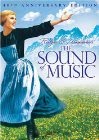
The Sound Of Music


(originally published in The Outreach Connection in December 2008)

I’m pretty sure the first film I ever saw in a movie theatre was The Sound Of Music. I think it was in 1970, when I was 4 – in those low-tech days, of course, a movie’s big-screen life didn’t necessarily end after a month or so. I don’t remember anything about the experience beyond the fact of it having happened. The second movie I saw was Disney’s The Aristocats, and that was really the start of my movie mania. I ran round for days singing “Everybody Wants To Be A Cat” and became an avid collector of all things Disney – in those low-tech days, of course, they hadn’t yet figured out how to squeeze you dry. I guess the Disney thing lasted five years or so and then morphed into a science-fiction mania, before broadening out into what you see paraded here every week.

Heston Of Musicals

I saw The Sound Of Music, or bits of it anyway, many more times on TV, as we all did. I guess that was courtesy of my parents, or maybe through some Manchurian Candidate kind of plot. I don’t think I’ve watched it for decades now, but I can unspool big chunks of it in my head. As a hard-bitten urban type never seen without a fedora and a cigarette, I guess you wouldn’t expect me to have it on my desert island list. I do like musicals, but my taste runs more to The Band Wagon and Funny Face - unashamed, elegant genre material. Julie Andrews has never been interesting to me except when used as a focus of her husband Blake Edwards’ passive-aggressive experiments (particularly in 10 and S.O.B.). I guess The Sound Of Music is kind of like the Charlton Heston of musicals, with the strengths and limitations that implies.

I’ve always had some lingering dissatisfaction with the material too, but never bothered to think about it in detail. And then I saw the new Mirvish stage production. I think I’ve said before that I’m happy being a movie guy, but I can’t deny I take away a greater number of specifically memorable experiences from live theatre than I do from cinema. But then, I don’t go anything like as often. Anyway, the musical works. An astonishing crowd-pleaser, it couldn’t be any smoother – wonderful design and coordination, immaculate performances, well-judged overall pace and handling of tone. My emotions went this way and that, exactly as they should.

This isn’t a criticism, it’s merely a personal reaction, but I’m not that susceptible to live theatre that attempts (seemingly) to emulate the impact of cinema. For example, the title song takes place on a stage-spanning, monumentally-crafted green hill: it’s stunning and eye-popping, but I couldn’t help finding it self-defeating. I mean, no one in the audience is going to forget they’re not actually on a mountain, and the literal-mindedness robs you of the pleasure of evocation, of how through lighting and movement and sheer belief an almost empty stage becomes the most complex of logistical and psychological spaces. But maybe, in this context, I’m like someone who moans about TV being inferior to radio as a stimulant of the imagination. (Although, I swear, as they start their climactic trek up the mountain to freedom, with the stage tilting to embody their climb, I was put in mind of a spaceship taking off. It can’t be just me – my wife said the same thing afterwards).

The Nun and I

All of that aside, I really enjoyed it. But I also realized something that’s always held me back. It’s the very title: The Sound Of Music. Obviously, it’s not very specific. But Rogers and Hammerstein titles almost always were: Oklahoma!, South Pacific, Carousel, The King And I. By that logic, the Von Trapp story should have been called Nazis In Austria! or The Nun and I.

Except that actually it is specific, because – as I perceived more clearly watching the stage show than I recall from the film – the true subject really is the redemptive and transformative power of music. The Mirvish production’s most moving moment I think, comes when Captain von Trapp, returning to his children and his gloomy house after a prolonged absence, furious at how they’ve loosened up under their new governess, melts on hearing them sing in unison (the title song again), eventually signaling his emotional reawakening by joining in (actor Burke Moses doesn’t have the fullest voice, but he’s often more poignantly expressive than the lead actress, Elicia MacKenzie). After that the house fills with music again; love follows, and a way to transcend the German occupiers (and, by the way, to this day is there anything that more immediately and intuitively chills a stage than a swastika?).

Although this moment “works,” it depends entirely on our comfort with the conventions at play. Of course we haven’t really just seen a dramatization of the power of music, because for the last hour plus, we’ve never gone more than five minutes without it. The kids are singing within five minutes of their first appearance; then in their next scene, they sing again. Of course we understand that some of these songs dramatize what are actually conversations (or perhaps inner reflections) within the world being represented (presumably the Mother Superior tells Maria to climb every mountain rather than sings it to her), while others are genuine performances (the family’s appearance at the Salzburg Festival). Others appear to lie somewhere in between (the “Do-Re-Mi” number).

Go See It!

That’s true of many putting-on-a-show musicals – my favourite The Band Wagon is exactly the same kind of mishmash. But The Band Wagon is in part about how personal and public personae dissolve in the joy of pure unpretentious performance: the lack of distinction is part of its point. The Sound Of Music, by contrast, is about the superiority of music over silence. But how can you dramatize that in a show that allows no silence?

Once I focused on this point, it brought home for me some of my other reservations, such as how the relationship between Maria and von Trapp is really too condensed to make their falling in love at all compelling (and I’m enough of a feminist to be underwhelmed by the prospect of a marriage in which decision- and concession-making will clearly not come close to being equally divided). Actually Maria surprisingly fades in the second act, being not that central to depicting how music works its ultimate magic.

I said I didn’t mean to criticize, and I meant it. I engaged with the stage production in a way I never have with the movie. I actually had thoughts about The Sound Of Music other than: Oh look, it’s on again. I realize this may not be the kind of endorsement to get the Mirvish organization – or you - excited. But I say - go see it!

Friday, April 9, 2010

My Superchannel Nights


For the past few months I’ve been a subscriber to the Superchannel package of cable networks, and I don’t know too many people who can say that. I’m not claiming I’m much of a husband (I’m not saying I’m a loser at it either – I’m just not addressing that subject one way or the other) but like all of us I guess I have my moments, because one of my wife’s favourite shows is The Closer, and I set up Superchannel so she could continue to watch it. Subsequently, she got into Men Of A Certain Age, Ray Romano’s more reflective post-Raymond show, so that was like gravy.

My motives then were entirely altruistic, but it’s worked out really well for me too, because Superchannel turns out to be a treasure trove of movies you otherwise wouldn’t think of seeking out. The occasional exception aside, like Valkyrie, Superchannel rarely seems to carry the box office hits: those all go to TMN. I could certainly believe Superchannel fills its schedule merely by scooping up the stuff TMN rejected (I’m not saying that’s what actually happens of course). But it makes for a rather wonderfully wacky mix. Some of it actually did have a (usually brief) release in theatres, but more often not (in Canada anyway); I imagine most of it’s available on DVD, but who would bother to go and look? So this week – and I must specify here that I am not receiving any promotional consideration from the people behind Superchannel – some recent/current examples of the kind of riches awaiting those who jump in.

Stuck

Stuck is a tight little genre movie (shot entirely in Saint John, New Brunswick!) with Mena Suvari as a nurse, driving home high, who runs into a homeless guy (Stephen Rea). The collision propels him into her windshield; she keeps going in a panic and leaves him in the garage overnight while she has sex with her drug dealer boyfriend, and then again the next day (knocking him unconscious to keep him from honking the horn) while she goes to work (see, she’s in line for a big promotion). Suvari seems to me a candidate for the emblematic Superchannel star – undoubtedly a “name,” the details of whose career for the last ten years are mysterious to all. But she’s appealing here, and Stuck is a consistent nutty pleasure, well controlled by director Stuart Gordon. I also highly enjoyed Brad Anderson’s Transsiberian, a knuckle-biter with Woody Harrelson and Ben Kingsley, set mostly on a train taking the desolation route back from China. Unsurprisingly, it winds itself so tight that the ending is something of a letdown, but up to then the underrated Anderson is completely on top of the wintry Lady Vanishes-type dynamics.

The Good Night is one of those increasingly common celebrity-laden exercises where you get the feeling they all forgot halfway through why they bothered. It has Gwyneth Paltrow, Penelope Cruz and Danny DeVito, but the central point is the unglamorous British actor Martin Freeman, as an underachieving composer whose dreams become more real to him than his waking hours. The movie has some interesting rough edges, and is intriguing for about an hour, after which you realize it’ll never go anywhere. I preferred it though to the somewhat rancid Choke, where Sam Rockwell plays a sex addict trying (not particularly hard) to pull himself together. This one has Oscar-winners too - Joel Grey and Anjelica Huston (you can’t help thinking the makers set their mind on getting Oscar-winners and just kept going down the list until someone said yes) – and seems to achieve its game plan pretty effectively, but it feels like being cornered in a topless bar by a smutty relationship therapist.

Battle For Haditha

That kind of stuff’s really the Superchannel bread and butter, but it also carries films of real distinction. Nick Broomfield’s Battle for Haditha, for me a much more impactful and moving Iraqi movie than The Hurt Locker, depicts a real-life incident in which a group of marines slaughtered dozens of local citizens as retaliation for losing one of their colleagues. The film might be viewed as unsubtle, drawing an explicit link from the US Army’s self-regarding (if not functionally deranged) excesses to the surge in local radicalization, but it’s extremely vivid and troubling. The same goes for Tony Kaye’s epic documentary Lake Of Fire, a long and unsparing journey through America’s abortion wars, sufficiently even-handed to leave the filmmaker’s own sympathies in some doubt (although it’s unmistakable that one side of the argument sounds much more bombastically neurotic, and male-dominated, than the other).

I actually saw Vinyan at the 2008 film festival, after which it disappeared before now reappearing on Superchannel: a grieving couple who lost their son in the 2004 tsunami travel to Burma in search of him. It’s exotically if murkily distinctive, carrying heavy shades of Apocalypse Now, although with a very different heart of darkness. Another MIA film festival premiere, River Queen has Samantha Morton on a similar quest in New Zealand, a century or so earlier, searching for her half-Maori son who’s been snatched by his grandfather. This one’s more of a slog, reminiscent at every turn of better films, but at least it’s distinctive. Yet another ex-TIFF presentation (so this is where they all go to die), Intimate Enemies recreates the war in Algeria through the eyes of a young lieutenant who resists his colleagues’ violent tactics, insisting on recognizing the freedom fighters’ humanity. It’s soberly gripping on its own terms and an effective reference point for the (it seems) never-ending debate about the appropriate terms of reference with terrorists (however defined).

The Yacoubian Building

As far as I know, The Yacoubian Building, a big hit in its native Egypt, was never shown at the festival or anywhere else here. It’s an epic saga of changing times, from the fading fortunes of the upper class, to the everyday injustices that see young women habitually molested in the workplace and young men driven to (again) terrorism. Told in broad, brassy (sometimes cheesy) strokes, you can virtually feel the filmmakers congratulating themselves for their daring in some scenes, and it’s certainly anthropologically interesting.

With four channels broadcasting twenty-four hours a day (for $16 a month), this is obviously just the tip of the iceberg (it also has boxing, and various other TV shows including some acclaimed ones from the UK). A lot of the content, as far as I can tell, lacks the distinctive features of the examples I’ve described here, but even when it sounds like trash, it often seems to carry some extra sprig of audaciousness (or an Oscar winning actor). Despite everything I’ve said, I don’t really need it – it just means I spend even less time watching my accumulated DVDs – but for now its ramshackle brand identity gives (almost) everything I watch on there a quirky sheen.

Sunday, April 4, 2010

The Romance of Astree and Celadon


(originally published in The Outreach Connection in August 2009 (before Eric Rohmer died))

One of my favourite DVD releases this year has been Eric Rohmer’s Les amours d’Astree et de Celadon, one of those few films I feel I could happily watch again every few weeks (although I’ve been resisting). Apart from showing at the 2007 film festival (to no particular attention), and then once recently at the Cinematheque, it never opened in theatres in Toronto as far as I’m aware, which as sure as any down-turning economic indicator tells you something is wrong in this world.

Eric Rohmer

Rohmer is an atypical great director (even allowing that they’re all atypical), but in his own way captures, perhaps as well as anyone ever has, something of cinema’s wondrous possibility. He was born in 1920, and has said that Astree and Celadon, made at the age of 87, may be his last work. If so, it’s a magnificent stopping point (nevertheless, we can hope for an even finer one). He was one of the original group of French critics who revolutionized the appreciation of American cinema in the 1950’s, before then starting to make their own films. He was already in his late 40’s when he hit his stride as a director, with a series of “Six Moral Tales” that won great attention, and even Oscar nominations.

Since then he’s made another 20 films or so, including a six film cycle of “Comedies and Proverbs,” a four-film “Tales Of The Four Seasons” cycle, and various one-offs often on historical themes. His last film but one, The Lady And The Duke, had him embracing digital technology for the first time. He’s a somewhat mysterious figure, not often giving interviews (although there’s a great, extended one on Criterion’s release of the Moral Tales), usually working with lesser-known actors. That’s the biographical outline.

Gene Hackman’s character in Night Moves says that he once saw a Rohmer film and it was like watching paint dry. His films have very little, if any, action in the conventional sense, consisting mostly of conversations, often just between the same small number of people. The six moral tales share the general structure of a man desiring one woman and ending up with another. His protagonists, often young women, chatter endlessly about love, or philosophy, or immediate goals and logistics or about next to nothing.

Moral Tales

Admirers often cite the rare intelligence and delicacy of Rohmer’s dialogue. I remember one writer labeling it as being for the most part a load of twaddle. It wasn’t necessarily even a criticism, but rather a different way of analyzing the director’s real sociological interests. The moral tales aren’t exactly what they might sound like - you don’t come out of them bearing bite-sized pieces of transferable wisdom. The inventory of morals and proverbs after all, is stuffed with contradictions, obvious nonsense, gross simplifications…all of which might nevertheless be true and liberating in the right time and place. The distinction between wrong and right moves is highly conditional, subjective, and can turn on its head in a second. All we can do is diagnose and act on it the best we can, and of course life is much bigger than we are, so our attempts are inherently foolish, even if they sometimes skirt, or even wholly appropriate, profundity. And of course it never plays out the same way twice, however similar the dance.

Rohmer’s shooting style is usually very unobtrusive and simple; his films often have gorgeous settings, which they observe as matter-of-factly as his generally attractive female leads. It surprised me (although it shouldn’t have) on that interview how carefully he thinks about the colour scheme and art direction in his films.

Quentin Tarantino reportedly said: “You have to see one of [his movies], and if you kind of like that one, then you should see his other ones, but you need to see one to see if you like it." I question the implied one-strike-and-out test, but if we go with the premise, would Romance of Astree and Celadon be a good taster? Actually, I’d start elsewhere, maybe with My Night At Maud’s. Astree and Celadon is surely designed for long-standing Rohmer lovers (and, I imagine, as a gift from the director to himself) – one of those classic climactic films reflecting its creator’s lifelong project at its most elemental and sublime, while still striking out into new territory.

End Of The Pilgrimage

The film is set in the 6th century, among Gallic shepherds; Celadon and Astree are in love, but she wrongly accuses him of having eyes for another; he jumps in the river and disappears, presumed to have died. He winds up among a group of nymphs who nurse him back to health; then rather than disobey Astree’s last tempestuous command to him that he stay out of her sight, he goes to live alone in the woods, where he builds a shrine to Astree’s goddess namesake, adorned with images of his love. A benevolent druid persuades him, however, to interpret Astree’s command as allowing him to be close to her, if disguised as a woman.

And what can this possibly have to do with the price of gas? Well, as I said, divorced from Rohmer’s earlier films, perhaps not much. Viewed in their context, it’s transcendental. The film is set in a formative time; people debate the relative status of Gallic versus Roman gods, and the merits of courtly versus hedonistic love. They apply a moral code, but it’s distinctly arbitrary. They balance grand, categorical pronouncements and instinctive pragmatism. In other words, almost at the dawn of organized society, Rohmer finds his preoccupations already well developed, but not yet weighed down by everything built since then.

His opening titles deliberately distance us from the fiction, stating that the story’s original setting has now been devastated and thus filmed elsewhere, and that the film presents the 6th century as it would have been imagined from the perspective of the 16th. This is an artful misdirection, since the film’s idea of physical beauty belongs wholly to our own times. Elsewhere too, the film exhibits a playful specificity while moving toward utter ethereality. At the end, physical logic is largely jettisoned, giving way to pure sublime blissful momentum. Although still set on earth, it might virtually have been transposed into heaven.

There’s often been a spiritual dimension to Rohmer’s work, while also no doubt that the answers to his characters’ problems lie here on earth. But such a sustained, attentive cinema has more than an undertone of pilgrimage to it, and in his perhaps-last film, Rohmer finally allows himself an arrival point where, as far as the protagonists are concerned, all is as it ever should be. Astree and Celadon’s surpassingly beautiful ending confirms the belief and delight underlying his wonderful half-century of cinema.

Friday, April 2, 2010

Lost Promise


I’m approaching my mid-40’s, and the conversations I’ve had lately with my contemporaries have been laced with disappointment. Many of my friends aren’t as content with their relative place in life as they used to be, even just a year ago. I was headed that way too, but I became self-employed recently and I’m happy with how it’s going, so I feel relatively in control of things. Except that our beautiful and brave dog died – he had cancer - so nothing feels as it should.

Greenberg

Ben Stiller’s character in Greenberg is about that same age: a carpenter by trade, although he tells people he’s doing nothing now. Years ago he was in a Los Angeles band, and was responsible for screwing up a possible big break, for which the others have never really forgiven him. Recovering from a mental breakdown, he returns to LA after years in New York, staying in his brother’s house while the family’s away in Vietnam, reestablishing some old connections and making one big new one, with Florence (Greta Gerwig), his brother’s personal assistant. He also takes care of the family dog, who promptly gets sick (based on the recent experiences I mentioned, I particularly connected with the moment when he receives a three thousand dollar vet bill).

Greenberg is molded from insecurity. From the opening shot of a hazy LA landscape, followed by various scenes where it just trails Florence around, searching her face in close-up for self-consciously long intervals, you feel director Noah Baumbach’s desire to transcend his raw materials; the film’s sense of itchiness in its own skin is a good funnel for Roger Greenberg’s prickly anxiety. It generates some great scenes, like a rather excruciating (and all the more convincing for that) initial sexual encounter. But a lot of the time, Greenberg feels as if it’s channeling Greenberg’s dyspeptic inertia – it starts off in various directions, but doesn’t really seem to care about getting anywhere. And, therefore, it never really does get anywhere – only to a very conventional, tentatively optimistic arrival point, marginally spiced up with an unexpectedly abrupt final shot…except that it’s unexpected in just about the way you expect.

Noah Baumbach

Part of the problem with the social circle I mentioned is that, frankly, none of us have had a real breakthrough idea in ten years. I don’t mean we’re uncreative or stagnant, but at best we’re only creative and progressive in the same way as so many other people, so there’s no money or glory in that. I mean, differentiating yourself, to the extent that anyone else in the world cares and actually opens up their wallets to you because of something you have to offer, is really tough. It’s easy for thinkers to say the new economy depends on small-scale innovation, but how many of those guys actually make their own living that way?

I increasingly look at movie directors now and think to myself, well, it’s the same thing, they don’t really have any more ideas. That’s what shaped my reaction to Martin Scorsese’s recent Shutter Island. If you really took it as the work of a so-called leading American filmmaker, it was plain ridiculous, but then I think to myself, well, just because Scorsese has this immense facility with the tools of cinema, it doesn’t mean he actually knows anything important. Maybe he did in the 70’s, but that’s what I’m saying, we all used to be better. So then I think, let the old guy enjoy his luck and indulge himself. Those of us who expect something from cinema, we’ll look elsewhere.

Baumbach is much younger than Scorsese, but I don’t really think he knows much either. The humour pieces he sometimes writes for The New Yorker, they’re just flimsy. The Squid And The Whale was a pleasant surprise a few years ago, but this is what I wrote here (because, as you can see, I’m not easily swayed by the latest fad): “It’s a most distinctive and subtly weighty work, but with the feeling of a one-off, although I hope I’m wrong.”

His follow-up Margot At The Wedding felt like a film he’d thought rather than felt his way into. Rex Reed called it “92 minutes of screaming, pouting, weeping and vomiting in an ugly home-movie style that could set movies back decades.” I said: “it seems to me there’s significant artistry and wit in how Baumbach’s dialogue consistently pirouettes and swerves and rears up: a movie where everything is dysfunctional (even nature looks like a flop here, said another critic) should count as some kind of achievement, no?” See, I’m no Greenberg, I’m always looking for the bright side.

The new film is a simpler and relatively calmer creation. The move to LA brings mixed benefits – Baumbach seems stimulated by the environment, but it’s already perhaps the most over-explored milieu in the history of civilization. Truly, who should care about these people in their high-end houses and – much as they claim otherwise – their relative abundance of life choices? The most interesting component by far is Gerwig’s character. A. O. Scott in The New York Times brought out the contrast like this: “It isn’t that she is any simpler or less thoughtful than he is, but rather that they don’t share the same cultural references and expectations. Disappointment — with love, with professional ambition, with the world as a whole — is an experience they share, but while Roger fights against it, Florence seems to accept it as a kind of birthright. He dwells angrily inside a cocoon of anxiety and frustrated egoism, while she takes shelter in a makeshift, modest nest: a few friends, an O.K. apartment, a job she doesn’t hate, an occasional gig singing at a mostly empty nightclub.”

Arnaud Desplechin

That’s exactly right, and at times, Greenberg seems like one of the few wide-release films that’s actually anthropologically instructive about the evolution of social expectations in this new economy. But the film’s not ultimately about Florence of course, and Roger’s own traits and life challenges are much more mundane. You get the sense Baumbach, perhaps largely through serendipity, was on the verge of opening up something new and bracing, but the limitations of his original conception held him back.

For me, the contemporary master remains the Frenchman Arnaud Desplechin, who in films like A Christmas Tale and Kings And Queen seems uniquely able to reventilate familiar family dynamics without ever seeming merely arbitrary or opportunistic. Of course, although his reputation is growing, Desplechin remains known only to a tiny minority of people who watch movies. Even genius, you see, doesn’t necessarily guarantee you that much. I really hope – beyond whatever darkness is necessary to power his art – that he’s happy and fulfilled, but maybe for someone who turns fifty this year, it’s too much to hope for.

Sunday, March 28, 2010

William Holden


(Originally published in The Outreach Connection on February 19, 2010)

Compared to most movie reviewers, I don’t tend to say a whole lot about the actors; in fact, I often don’t mention them at all. That’s a reaction partly to too many critics whose pieces consist almost solely (apart from turgid plot summaries) of subjective reactions to the performers, and partly to too many frustratingly rootless real-life conversations. If (say) Tom Cruise is in a movie, there are plenty of people whose reaction to the film will basically begin and end with that fact – perhaps because they always found him off-putting, but equally as likely because of the Scientology stuff, or whatever else they read in the tabloids. Others will insist that if Daniel Craig is in a movie, then it must be worth seeing. For the most part, I guess I take it all pretty pragmatically, just as we have to accept the motley crew we jostle up against in daily life. But then readers will know I’m a true auteurist. Inglourious Basterds for instance had some of the performances that delighted me most last year, both from new discoveries (Christopher Waltz, Melanie Laurent) and, equally strikingly, from known quantities who didn’t previously seem to have it in them (Diane Kruger). They should all be praised, and perhaps win awards, but without Tarantino’s kick-ass dialogue and sensitive directing (and brilliant casting instinct), there’d be nothing to talk about. So I guess to me talking about the vessel isn’t as rewarding as talking about the creator (I know, that’s a little reductive).

Classic Stars

It’s different with the classic stars. I could fill this article solely with a list of people I revere, and who thrill me virtually every time I see them. I’ll name a few just to get your imaginations going: Cary Grant (possibly the greatest of all), Barbara Stanwyck, Jack Lemmon, Catherine Deneuve, Henry Fonda, Kim Novak, Alain Delon…that’s a deliberately quirky list! Sometimes I’ll forget someone for a while and then rediscover them – I was stunned recently when I saw my first Lon Chaney movies in years. Sometimes I’ll watch a movie featuring someone I usually don’t think I like and then I’ll say to myself, well, you know, that guy (or gal) was pretty darn good after all. But I don’t write about them here very much because, basically, when would they come up?

I thought I’d mix it up today though, because I was watching Golden Boy, and it made me think about how much William Holden’s meant to me over the years. Nowadays he’s mostly in that category where people might know the name but then struggle to recall more than one or two movies. As with most of his peers, a lot of it’s not particularly worth remembering. But I think Holden was the first actor who really moved me through his career arc. Everyone ages of course, but he aged rapidly and brutally: making The Wild Bunch in his early 50’s, he looked older than many 70-year-olds (especially Hollywood leading man 70-year-olds), and in a way you knew wasn’t just bad genes: his face was weary, ravaged, and often self-disgusted. In his last decade, he chose a fair number of roles where he got to rail against corroded values: Lumet’s Network (his fourth Oscar nomination), Wilder’s Fedora, and his final film, Blake Edwards’ S.O.B. In that one, playing a Hollywood director, he delivers his final screen line – “So long pal” – while orchestrating a Viking-style burial at sea for an old friend brutalized by the system.

Angels and Demons

At the same time, the dead friend is a nut, and Holden’s character – for all his cynicism – is his hack collaborator in a stupid venture, and also someone who’s drunk too long and deep from the good life. Many of the greatest stars, of course, gain their resonance in large part from what we know of their off-screen life: often to poignant or tragic effect, as with Marilyn Monroe and James Dean and others who died too young. Holden died too young too (he was 63) and yet by then it was already hard to think he could possibly live much longer (not productively at least). When I was getting into movies as a teenager, while miserably wrestling with the point of it all, I found Holden unbelievably relevant, suggesting some bitter triangulation between angels and demons, and utter frankness about what it would all cost.

At that pre-Internet time you could buy big heavily illustrated books about virtually any Hollywood star, and I think the only one I ever bought was The Complete Films of William Holden by Lawrence J Quirk. I still have it. It’s a purple prose kind of exercise: “..(he) drank to forget his ever-increasing inner torment – the torment of a man who did not truly know himself – deep down – and didn’t want to.” His very first film, Golden Boy, already drew on that ambiguity – he’s a hothead whose first passion is classical violin, but then he takes up boxing instead! After that, the younger Holden had trouble finding a niche in the 40’s, until hitting his stride with Sunset Boulevard in 1950. After that he was at the very top for a decade or so, winning an Oscar for Stalag 17, and appearing in Sabrina, The Country Girl, Picnic and The Bridge On The River Kwai. I’ve always loved the way Holden delivered a line – like Morgan Freeman now, seldom forcing it, but often finding some intonation suggesting a richer appreciation of life’s mordant ambiguities. I haven’t seen a lot of the junkier films he made – he’s not the kind of actor whose career seems to demand comprehensive viewing. His very persona suggests a helpless marrying of highs and lows; S.O.B. is an almost mystical intertwining of both.

The Unmanly Art

Some basic facts: he was born in 1918, as William Franklin Beedle Jr., and was found dead in November 1981. Quirk says he’d died nearly a week before, “when he hit his head on an end table in a drunken stupor – and bled to death.” I found that chilling as a teenager, and I think to this day it colors my fears of aging. That’s silly of course, but this is what stars have always done, held out possibilities, complexities, pathways, warning signs. I should rather say that’s what they used to do, because although the greatest stars now may be interesting as phenomena, they’re not very instructive as stories in themselves. Holden supposedly found acting “unmanly,” and I don’t know what he meant by that exactly, but he never communicated any sense of entitlement, never communicated that he was somehow doing anyone a favour by lending his presence. If indeed we’re meant to be learning something now about shedding unsustainable excesses and going back to basics, we could do worse than watch some Bill Holden movies.

Low Life


Jacques Audiard’s Un prophete, given its consensus status as one of last year’s best European films, delivers some surprisingly conventional pleasures at times. As narratively meaty as The Godfather, it centres on Tarik, a young Moslem (although of no great devoutness) starting out on a six-year sentence in a French prison, quickly forced by the dominant Corsican clique to bump off an informer. When he pulls it off, he wins their protection, and gradually starts to rise within the inmate hierarchy while also (through a series of one-day leaves) making himself a player on the outside. It’s a strong, nicely complicated plot, with lots of muscular confrontations and interactions, and Audiard is right in the middle of it; the violence here, although sporadic, is extremely intimate.

Un prophete

The movie’s real impact though – which, I found, becomes increasingly satisfying in contemplating it afterwards – comes from its implications for a Europe in which the old guard’s power becomes increasingly hollow and formal, a vestige of past glories, plainly unsuited to the complexities of the new economy. The title comes from another criminal’s wonderment at how Tarik seems to straddle dividing lines that used to be inviolable, something he expresses in quasi-mystic terms (and for which Audiard conjures up a suitably startling, inexplicable image). But the protagonist never struts around like a creation of cheap melodrama (such behavior also belongs to the old timers); compared to, say, the trajectory of Pacino’s Michael Corleone, his conscious plotting and mastery of the game still coexists with a certain near-guilelessness. The final image, as he walks free at the end of his sentence, captures this superbly, and Audiard stirs the pot further by overlaying a raucous version of “Mack The Knife” on the soundtrack – obviously in its core content a link to a long line of thuggery, but still a beautifully strange and disconcerting cultural mash-up. Un prophete is full of moments like this, reminding us of the deadening precision of the conventional “well-made” film.

Nick James of the British film journal Sight And Sound recently blasted Britain’s equivalent of the Oscars for denying Un prophete a best film nomination, going instead for “an incredibly lazy…list of the most promoted good US films” (plus An Education). Among these was Precious, which he said “has gut-wrenching performances, but is otherwise limited.” Of course, the film’s had a high profile over here too ever since the Toronto film festival, where it won the People’s Choice award; for a while after that people mentioned it as an Oscar front-runner, although it ultimately came in a bit short (it won for its screenplay, and for Mo’Nique as supporting actress). I avoided the film for a long time, suspecting a wallow in sentiment and freakishness, put off by some of its key selling points (the aforementioned award, which hasn’t usually gone to the most challenging works; Oprah’s involvement as executive producer and general drum-beater).

Precious

I finally got round to it, and admit to liking it more than I expected. I certainly liked it more than critic Armond White, who called it a “carnival of black degradation,” and went on: “Not since The Birth of a Nation has a mainstream movie demeaned the idea of black American life as much as Precious. Full of brazenly racist clichés…it is a sociological horror show.” Well, it’s certainly a spectacle at least. Precious is a grotesquely overweight 17-year-old, impregnated for the second time by her own father, physically and psychologically abused by her lazy wretch of a mother, weighed down by learning difficulties and chronically low self-esteem. Things start to turn around when she enters a special education program, developing a better relationship with the teacher and the other girls; also in her corner are a nurse and social worker played by Lenny Kravitz and Mariah Carey respectively.

My positive reaction was partly relief that the “sociological horror show” aspects, which I’d rather been dreading, counted for less of the film’s overall impact than I’d expected (and ultimately, the most disgusting thing about it all may have been the close-up shots of the hideous food Precious and her mother live on). A lot of it’s pretty conventional bonding and discovery stuff, and while the psychological revelation at the end is rather grotesquely fascinating, it seems to come out too easily. This aside, the movie often feels like a scrap book of ideas and quasi-experiments (some think it’s best taken as a comedy – Jim Emerson on his Scanners blog said it’s a “virtual remake of John Waters' 1974 Female Trouble”). Precious imagines herself in various glamorous situations, and Daniels puts them up on screen, but only to drive home the obvious point that she imagines a better world for herself (the device only becomes forceful in the scene where Precious imagines her reflection to be thin and white). At one point, reaching for his inner Spike Lee, Daniels swirls the camera around Precious while replacing the background with a montage of Martin Luther King and other images of changing times; it looks good, but if the point is that Precious represents some kind of witness to or reflection of history, it’s not at all clear how.

Strenuous Impact

At other times, Daniels certainly seems to frame his shots to emphasize Precious’ bulk, and Gabourey Sidibe, the lead actress, talked in an interview about how he pushed her to assume an ugly, blank expression. Of course, the film has an in-built self-defense, that those who find grotesque the portrayal of Precious merely reflect the attitudes that suppress her (and all the world’s non-conformists). But as White points out, when Daniels even includes an episode of her stealing and then devouring a bucket of fried chicken, it seems that at the very least, the director is using cliché to provoke us. I don’t know what the provocation amounts to though. It would certainly be legitimate to posit that poor food choices and culture constitute a form of ongoing abuse against and within the lower classes, but the film doesn’t have any interest in that topic.

It’s plain we’re meant to reserve at least a little sympathy for Precious’ mother, an ignorant woman who knows no better. But when we see the teacher’s domestic life – she’s a beautiful and cultured lesbian living in a dream apartment – Daniels’ obvious comfort with this stratum of society (you can almost feel his relief at being able to ease off for a few minutes) underscores the strenuous “impact” of the lower-rent material. In summary, it’s a film of moderate interest and impact but almost no lasting importance, and the comparison with Un prophete tells you something about the distinction between unfettered, intuitive artistry and (albeit somewhat fearless) gimmickry.

Tuesday, March 23, 2010

Messages Of War


(originally published in The Outreach Connection on March 12, 2010)

One day, as they used to ask where you were when you heard about the Kennedy assassination, they may ask where you were when your disappointment with Obama crystallized. For me it was his clinical, politically calculating Nobel Peace Prize acceptance speech.

“ Make no mistake,” he said, “evil does exist in the world. A non-violent movement could not have halted Hitler's armies. Negotiations cannot convince al Qaeda's leaders to lay down their arms. To say that force is sometimes necessary is not a call to cynicism - it is a recognition of history; the imperfections of man and the limits of reason…yes, the instruments of war do have a role to play in preserving the peace. And yet this truth must coexist with another - that no matter how justified, war promises human tragedy. The soldier's courage and sacrifice is full of glory, expressing devotion to country, to cause and to comrades in arms. But war itself is never glorious, and we must never trumpet it as such. So part of our challenge is reconciling these two seemingly irreconcilable truths - that war is sometimes necessary, and war is at some level an expression of human feelings.”

The Price Of It All

This is plainly true on some level – the point about Hitler seems apt and proportionate. But the objective looming nightmare that prompted the Second World War monstrously outweighs the ragbag threats underlying current military adventures. Of course Al Qaeda scored a horrific success on 9/11, but it’s never been coherently explained how that justified diverting the national and international conversation to the extent that followed. There’s never been a moment when, for the “average American,” the likelihood of death by terrorist even vaguely approached the daily threats posed by the act of getting into a car, lousy diet, the perils of the average kitchen, and so forth. That kind of point sounds trite to some people, but when our physical, environmental and financial infrastructure is under such threat, and people face such difficulties in getting any kind of functional life together, we owe each other a coherent conversation about what we can expect from life and society, and what we can’t.

Placing a price on human life sounds odious, but we do it in one way or another all the time. As long as people die in poverty, from malnutrition or preventable disease, anywhere in the planet, then we’ve chosen – whether we acknowledge it or not – to accept death. I don’t say that’s wrong – we can only do so much. But it’s puerile, and intensely damaging to our ability to move forward, to fixate on avoidable deaths from certain causes (Olympic warm-ups, Toyotas, natural disasters), while simultaneously sucking up the risks, or the demonstrated bitter costs, of quieter but far more damaging calamities elsewhere. War, as it’s waged by Western society in this century, merely evidences a rush to action against some splashy, exotic threat; a rush the country can’t afford, monetarily or existentially. It’s especially odious since our present-day wars never demand the collective sacrifice that ought to accompany such “necessary” state-sponsored violence. It’s easy for us to say we support our troops when we have no idea who they are or where they come from. I would probably argue now that if war doesn’t warrant some kind of draft or necessary participation, then it can’t have risen to the level of the necessary.

The Messenger

Obama then, to me, with no great finesse, was merely playing the flinty philosopher king. But the very phenomenon of him standing in Oslo delivering this calculated crap reconfirms how war distorts conversations, values and perceptions. It’s noble to give one’s life for one’s country, but shameful to ask someone to do that without a full accounting of how the sacrifice will actually aid “one’s country”. Blind adherence to military culture, values, and notions of honest service carry the real and often-exploited danger of placing too little value on one’s own life and possibilities. I seriously doubt that any 18 or 20 year-old knows enough to be allowed to choose such a path. Even mundane professions demand multiple levels of training and qualification, refining not only technical skills but also the accompanying maturity and sensibility. But since it fuels national dreams of glory while letting the rest of us off the hook, we place no such limits on allowing kids to sign up and throw themselves at horrors that most of us can’t imagine.

The distorted contours of the military are at the centre of Oren Moverman’s very good film The Messenger, which has opened rather belatedly in Toronto (it’s a 2009 release in the US, and was nominated for Oscars for its screenplay and for supporting actor Woody Harrelson). A young sergeant (Ben Foster), injured in an explosion and now back home, is assigned to casualty notification, accompanying an older captain (Harrelson) who informs the next of kin about fatalities. The task, like everything else about the army, comes wrapped in meticulous protocol, some of which contradicts the sergeant’s natural empathy. Off duty, they drink; the older man relentlessly looks for sex; the younger man tries to start a relationship with a young widow (Samantha Morton), struck by her strange disconnected grace at the moment she received the news.

Armchair Generals


After the initial scenes, we see little of the Army except the two men – it’s as if they’ve been cast into some zone of abstraction, purporting (ridiculously) each time to deliver a personal message from the “Secretary of the Army,” repeatedly sparking reactions they didn’t foresee and have no practical way of alleviating. But then, sudden grief is as much a part of the soldier’s iconography as the folded flags and the polished shoes. The Morton character moves the sergeant because she seems to lie outside any normal parameters. When they come to inform her, she’s hanging a man’s shirt out to dry, and the captain lasciviously speculates she’s already moved on to someone else. But the sergeant perceives in her, I think, a quiet complexity that will catalyze his necessary regeneration.

It’s revealed near the end that the captain, for all his mastery of the rulebook, has never seen serious action; he’s a pure creation of the myth and the machine, and internally tortured by the limitations that imposes on him. The sergeant is an official hero, but he knows the arbitrariness of such labels. Because he’s experienced and been damaged by the brutality at the centre of it all, he can afford to define himself less by protocol and more by his own inner truth. When the movie ends he’s only starting to embark on that project, but he knows he’s taken a first step and therefore can go further, perhaps even while remaining in the army. If we’re to find any half-sane place for war in our crazed world, it must be informed more by the humanity it so often makes a mockery of, and infinitely less by the slick babblings of armchair generals.

Sunday, March 21, 2010

Wheels Of Power


I recently rewatched Alan J Pakula’s All The President’s Men, which inevitably seems like more and more of a period piece as the contours of politics, the media, and the hopeless intertwining of the two continue to mutate and shrivel. Although the two journalists at its centre work for The Washington Post, and thus might be thought to occupy a place of privileged access, it’s striking how little power they actually have: they’re forced to grab at the vaguest of leads and connections, as likely to lead them in a circle as to any sort of revelation. You get the sense there are dozens, if not hundreds, of insiders who essentially know about the Watergate cover-up and how far up the chain of command it leads, but the wall between government and the rest of the world is presumed to be inviolable. There are many frightened people in the movie, but it’s never clear how much this is a function of specific threats or fear of reprisal (at one point, one of the two is told his life may be in danger, but it’s unknown to us whether that’s actually the case). Government, you feel here, doesn’t need to threaten: by its nature, it bends perception and morality, enforcing its will.

Roman Polanski

When All The President’s Men ends, Nixon’s resignation is still a year and a half away: if the movie was about climbing Everest, it would be the equivalent of running the end credits as they reach some intermediary base camp. But in the last scene, of the President’s second-term swearing-in playing on a TV in the foreground, while the two newsmen type feverishly away in the background, there’s the sense of murk and mystique having lifted, and direct battle lines being drawn. Soon afterwards, heavier wheels will begin to turn.

Coincidentally, the following day I watched Roman Polanski’s new film The Ghost Writer. Polanski’s best film by most appraisals, Chinatown, was made a couple of years before Pakula’s, and belongs in the same broad category of 70’s political paranoia classics. It draws more fully on genre expectations though: it has a hard-bitten private eye, a femme fatale, hoodlums with knives, and a true monster in the seat of power. Polanski handled it superbly, but it’s something of an anomaly in his career, owing much to the writer Robert Towne. Elsewhere in his career, Polanski has had to channel his preoccupations through gaudier creations. He’s returned on several occasions to the occult (Rosemary’s Baby, The Ninth Gate), to more conventional thrillers or limited suspense structures (Frantic, Death And The Maiden) or to the outright bizarre (What?, Pirates). It’s often said, and presumably with some validity, that the recurring sense of claustrophobia in his work in some way reflects his horrifying wartime experiences, and no matter how prosperous and successful he’s been, he’s never been allowed the unquestioned freedom or stature that normally comes with that. It’s possible he might end his life in jail, or maybe (in what would sum up a lot of this) an ultra-luxurious house arrest version of it.

The Ghost Writer

The comparison with All The President’s Men helps to underline the limitations of The Ghost Writer. There’s a link in the underlying premise: an over-matched outsider pushing after a truth that severely threatens the interests of the establishment. He’s played by Ewan McGregor, as a ghostwriter parachuted in to patch together the memoirs of Adam Lang, a (very) Blair-like former British Prime Minister (Pierce Brosnan); his predecessor on the project mysteriously drowned. As he arrives, evidence blows open that Lang knowingly sent individuals into the wheels of torture, triggering the threat of imprisonment and a war crimes trial. Cocooning in wintry New England with the former PM and his entourage, the writer discovers evidence of something murky in Lang’s past, and realizes it might be more information than anyone can be allowed to get away with knowing.

The film contrasts grey, perpetually windswept island landscapes with clean, modern interiors, and it’s part of Polanski’s skill that it frequently feels as tightly confined as a chamber piece like The Tenant. From the very start, McGregor’s character seems severely overmatched; apolitical and with no particular resources or stature, he seems like a kid in a world of men (McGregor’s much better directed by Polanski than he was in his somewhat similar role in the recent Men Who Stare At Goats). The movie catches his transgressive thrill as he finds himself a spectator to some high-octane strategizing, but no matter how much he learns and stirs things up, he remains outmatched in some psychic sense, a spectator to a history that will always be bigger and more sure of itself than he can imagine.

All of that said, the film is constrained by conventionality. The puzzle unwinds through documents taped to the bottom of a drawer, bearing a crucial phone number; through coded messages hidden within a manuscript; through the threat of mysterious dark figures driving a mysterious dark car; through highly compressed plotting that has secrets opening up like the doors of busted safes. In other words it’s a genre piece, as so much of Polanski’s work has been. Looking back on his career, you recall many great moments and images, but with the sense of surveying an intriguing case study rather than that of being enhanced by a major artist’s insight.

Fish Tank

At the end of Andrea Arnold’s Fish Tank, the mixed-up protagonist Mia weeps over an expired horse. “She was sixteen,” says the nineteen-year-old who may end up as her boyfriend, “it was her time.” Mia is fifteen, and through much of the film seems to be carrying much the same feeling about herself. Her mother is submerged in her own barely-vanished youth, casually mentioning at one time that Mia was almost aborted; her relationship with her younger sister consists almost entirely of expressions of mutual hate; and she’s on the way to a “special school” for problem students. Beneath all this of course, she’s just a kid, believing she can make it as a dancer, getting sentimental over that old horse, and surrendering to a crush on her mother’s latest lover, of which he’s all too willing to take advantage.

This leads to a horrifying, almost unwatchable, sequence in which, utterly out of control, she toys with the greatest possible disaster; she pulls back from it, and the movie concludes with some relative calm and hope, but this contributes far less to its cumulative impact than what precedes it. The milieu evokes various Ken Loach films, but Loach tends to immerse himself so much in earthy banter that the impact becomes somewhat stylized; things are more grimly grounded here, although it’s still expertly structured and paced as a narrative. It’s a compelling film anyway, with an attention-holding central performance by the new discovery Katie Jarvis.