Sunday, September 25, 2011

Lost in Lynch


(originally published in The Outreach Connection in May 2007)

David Lynch’s Inland Empire opened here, at the College Street Royal, more than four months after it appeared in New York, a very long gap for such an esteemed American auteur. But for once, it’s not clear we can blame the usual odd machinations of studios and distributors, because Lynch is distributing the film himself – according to one article he’s even handpicking the theatres. A while back there were stories about him sitting in an armchair alongside a Los Angeles freeway, to promote the film’s Oscar chances. And he recently published a book on transcendental meditation, which seemed to strike most reviewers as surprisingly airy.

On DavidLynch.com

If you go onto www.davidlynch.com, the first thing you see is an ad for David Lynch Signature Cup Gourmet Coffee (it’s 100% organic); the site also has short films, art work, animation, an extensive online store, and a live webcam to a birdfeeder incorporating a “disk of sorrow” designed to keep away marauding squirrels. A caption tells us that this section “is currently under re-development and will return in the fall of 2004” – I guess Lynch hasn’t been keeping on top of that. Sum all of this up, and it’s clear that his preoccupations are pretty widely spread. Which makes it no surprise that it’s been six years since Mulholland Drive. What’s more surprising is how little Inland Empire adds to the achievement of that earlier work.

I liked Mulholland Drive a lot the first time I saw it, then I went back a second time and loved it. In my initial review, I wrote: “the crux of the movie seems to me to be the narcissism and self-absorption at the heart of Hollywood – the image making and self-positioning. If this seems a rather old-fashioned theme, more suited for a Hollywood that’s largely been lost – well, that’s what Lynch gives us here, a faded, seedy milieu where artistry takes second place to staying on the right side of gangsters.” Ultimately, I thought Lynch “captured the complexities of something real and significant while still indulging his considerable idiosyncrasies to the hilt.”

Well, Inland Empire is also about Hollywood, and also centered on an actress, played this time by Laura Dern. This time there’s a greater focus on the filmmaking process itself, with Jeremy Irons playing the director of Dern’s film. For a while, this central plot proceeds in a relatively linear fashion, but then it becomes unclear whether certain sequences belong to the film within a film, or whether they’re dreams, or delusions, or part of an alternative reality. Around the edges there are intrusions of even stranger visions, most notoriously scenes of human-sized rabbits in a dingy room, delivering deadpan lines to the accompaniment of an occasional laugh track.

Codes and Readings

Lynch of course has an unparalleled activity to evoke menace and lurking threats, and to create a sense of some underlying coherence no matter how the films’ raw elements dispute that. Inland Empire, shot on digital video with an often-grainy image quality, is suffused in this tone. The title, although it’s no more capable than anything else in the film of being precisely explained, nevertheless seems perfect, suggesting both claustrophobia and grandeur. The film sustains its project over three hours, suggesting an almost limitless capacity for further revelation, or confusion, the two being much the same in this case.

The rabbits might be the litmus test for categorizing responses to the movie: what the hell is that all about? Eye magazine even highlighted the question on its cover. Lynch himself is about as tough an interview as there is on this kind of thing (the book Lynch on Lynch is almost hilariously unproductive at times). Michael Atkinson in Sight And Sound suggests that the “surest way to find disappointment in Lynch’s Byzantine, exhaustive howl is to hunt for codes and readings, while ignoring the sensual textures of life in the under lit corridors of his imaginary space.” Putting it more bluntly, he adds: “Inland Empire appears to be a film that exists for itself and for its maker, not necessarily for us.”

This may be the inevitable extension of where Lynch has been headed all along (although not necessarily the end point!) But personally I think Mulholland Drive, even if it now seems like more of a transitional work, was more satisfying in its applicability to “us,” although I realize that may seem merely a symptom of unwillingness to accede to the new film’s ethos. Atkinson notes correctly that Inland Empire, even though it seems in some sense to be about a woman’s psyche, shows no signs of traditional psychology: this (and the greater abstraction of its evocation of Hollywood) seems like the key leap from Mulholland Drive. But although this may evidence greater artistic audacity, it also seems almost sadistic at times (I wondered once or twice whether too much of Lynch’s instinct didn’t rest in the basic thrill of taking the initially elegant Dern and converting her into a battered whore).

Nastassia Kinski!

But if you go back to the beginning of this article, it’s plain that Lynch is progressively less a film director, and more – in himself - an evolving work of multimedia performance art, and it’s hard for me to imagine anyone watching Inland Empire in isolation from some sense of the man behind it (his antics seem designed to ensure that no one will). Lynch may be a weirdo, but he’s also plainly in touch with his inner child (even if that inner brat is an uncomfortably close cousin to the mutant offspring in Eraserhead). There’s a wryness about Inland Empire that acts as a hedge against possibly taking it too seriously, and you feel Lynch’s delight in stories, or fragments of stories.

In a scene where Dern appears to be suffering an agonizing death, she crawls to lie among some down and outers in an alley, receiving some token sympathy and acknowledgment before their conversation moves on, largely ignoring the pitiful bleeding woman in their midst, evoking an entirely different movie than the one we’ve been watching. One element of the story we listen to – a pet monkey – turns up in a final scene, along with Nastassia Kinski, sitting on a couch, and a bunch of dancing girls: it seems less like the final scene of the movie than we’ve been watching than, perhaps, the opening of an entirely different one.

And of course, the tantalizing use of Kinski (along with earlier brief cameos by recognizable figures like William H. Macy and Mary Steenburgen) hardly seems like the choice of someone who’s given up on conventional tweaking of the audience. I found this ending remarkably peppy and hopeful, and although Lynch seems to be saying he’s given up on using film (rather than digital video) and on trying to make conventional cinema, I’m not sure what else can possibly lie for him in this direction. I hope to see him back from the inland, perhaps bringing Nastassia Kinski with him, while leaving the monkey (and much else besides) to hang out with the squirrels on the outskirts of the disk of sorrow.

Behind the wheel

If I were a movie director, I don’t think I’d spend much time tracking lovingly across polished hoods, or indulging in the romance of the open road. I don’t even drive any more, and the only two kinds of car I can identify with certainty are the Mini and the Beetle. Still, you’d have to go out of your way not to have affection for some car-centric movies. My favourite, in my movie kindergarten years, used to be Walter Hill’s The Driver, although I haven’t revisited it for many years now. At the time I hadn’t seen much, if any, of the European cinema – Jean-Pierre Melville’s Le Samourai in particular - that influenced the film’s minimalism (the driver isn’t named; he has virtually no personal life, and so forth), but I responded to the polished abstraction, and in particular to Bruce Dern as the edge-of-crazy cop obsessed with catching the driver. I could still recite almost verbatim a monologue he has about reading the sports pages as a daily education in winners versus losers. Of course, I couldn’t do it anything like Dern could.

The Driver

The Driver seemed stylish at the time, but I expect it would just be a rusty old jalopy compared to Nicolas Winding Refn’s new film Drive. Not that there’s any explicit connection between the two, but the similarity in the titles and the protagonists – two virtuoso, nameless getaway drivers – makes Hill’s film an unavoidable reference point. But much as I adored The Driver, the comparison (again, subject to possible faulty recollection on my part) instantly works to the new film’s benefit. Hill’s work was terse and self-contained, requiring your submission to its mood and iconography. Drive is more extravagantly experimental, like a splashy art installation that seduces you into endlessly speculating and arguing about it afterwards. It works terrifically as a thriller too, but one of the Hollywood websites reported it scored surprisingly low scores in audience exit polls, compared to the enthusiasm of critics (it even won the best director prize at Cannes). I suppose it’s because for those who’d expect a movie called Drive to be a close cousin to, say, The Fast and the Furious, Refn’s film might seem like a pain in the behind; where a conventional movie might move seamlessly from A to B to C, Drive keeps on staring at A, and dreaming of B, before suddenly beating C into a bloody pulp and then landing on D.

I don’t mean to be facetious, for instance, in saying that the most suspenseful aspect of the film, by and large, comes in wondering whether the driver, played by Ryan Gosling, is going to say or do anything; time and again, it pushes the clichĂ© of the strong, silent protagonist to the point of absurdity. But as it goes on, you realize Refn is having fun with the device: at one point he reveals Gosling’s impassivity as a staring game he’s playing with a kid, and in the closing moments it works to taunt us about whether the driver is even alive. In another scene, after the driver commits a shocking, out-of-nowhere act of violence in a strip joint, a group of girls who witnessed the scene just keep on sitting there, utterly motionless and unmoved. Taken literally, you’d have to assume they were drugged, but of course you can’t take it literally; it’s an aesthetic device, in part a joke, and also maybe some kind of evocation of the psychic toll of life lived on the fringes.

Silence and violence

The violence, in contrast, really is startling; for a while you assume the driver lives entirely by his wits, and then suddenly he’s threatening to beat up women and emotionlessly doing much worse to men (Refn doubles down on this line of provocation by casting Albert Brooks - you know, the lovable master of low-key comic observation – as the coldly brutal crime boss; it works a treat). Almost as startling are the extremely bold, distinctive songs on the soundtrack: in no sense “background music,” they reminded me of the 80’s heyday of Giorgio Moroder, when movies like American Gigolo and Cat People and Top Gun simply yielded on occasion to synthesized aural assault. Even a small detail like Drive’s opening credits, displayed on the screen in a pink cursive script, demands to be noticed; no doubt to be luxuriated in for its boldness, but perhaps at the same time to be quietly mocked. I mean, pink?

The bottom line, to repeat a phrase I used last week, is that Drive forges an unusually potent conversation with the viewer, constantly turning in on itself, insisting on its own artificiality – and when it does deliver genre requirements, almost knowingly overdoing it. The film doesn’t have much in the way of social relevance – anything resembling the “real” world is kept at a distance; the only clear view we get of a cop’s uniform is when the driver wears one early in the film for his daytime movie stunt-driving job. In that same scene, he perfectly executes a rollover of the car he’s driving, an early deconstruction of the usual car chase bread and butter that warns us against succumbing to such patented thrills thereafter. Actually, although Drive has a fair bit of driving, it’s often just that, the driver driving: I wouldn’t classify it as a great car chase movie in the way of Ronin or Bullitt, although Refn does enough of that stuff to show us he’s capable of it. It feels instead that he wanted his film to evoke a seducer who eschews the usual moves and erogenous zones.

Observing nothing

I should save some space to indicate the film’s plot, because it does indeed have one – the driver develops a sympathy for a young mother and son living in his building; her husband is released from jail and tries to move on, but he’s still in debt to some people who threaten to hurt his family unless he pulls off a job for them. The driver decides to help him out, but it goes horribly wrong, and he’s forced to become more involved. In addition to Gosling and Brooks, both excellent (although I think the articles calling Gosling the new Steve McQueen and suchlike are over-extrapolating, from the evidence available to date), the cast includes Carey Mulligan, Bryan Cranston and Ron Perlman. Actually, the actors I’ve mentioned, plus the boy who plays Mulligan’s kid, probably account for ninety-five per cent of the film’s dialogue between them; the movie doesn’t spend much time on diversions. Except that is, when the diversion becomes the journey, which is a characteristic of art.

Sunday, September 18, 2011

Emotional truth

(originally published in The Outreach Connection in December 2007)

Noah Baumbach’s The Squid and the Whale was a pleasant surprise a couple of years ago - a marked contrast with his earlier, conventionally quirky movies, his humdrum writing work with Wes Anderson (The Life Aquatic) and thin humour pieces for The New Yorker. It had strongly autobiographical roots – the set-up of two New York writers whose marriage is breaking up, and the two boys caught in the middle, apparently paralleled Baumbach’s own teenage experience. The film had lots of funny lines, but also sustained a uniquely dour, rather squirmy quality, shot through with denial and displacement and self-loathing – the ending provided only the most minimal degree of closure. At the time I wrote: “It’s a most distinctive and subtly weighty work, but with the feeling of a one-off, although I hope I’m wrong.”

Margot at the Wedding

Baumbach’s new film Margot at the Wedding seems like a calculated attempt to capitalize on that momentum (and perhaps on the sudden availability of financing) – a film that he thought rather than felt his way into. Nicole Kidman plays Margot, a New York-based writer who goes upstate for the wedding of her sister Pauline, who she’s barely talked to for years. Pauline’s fiancĂ©e is basically a waste of space, but they have good sex and it works for them somehow. Margot’s teenage son is there too; another writer she’s been sleeping with lives close by; her almost estranged husband makes a brief appearance; and there’s a scary group of rednecks living next door.

Film Comment summed it up this way: “…in this movie, as in his others, Baumbach refrains from judging his indelibly drawn characters and remains dedicated, above all, to the emotional truth of his material.” Now, Film Comment is a very good magazine, but I have a feeling (a) that they praise many movies in these same general terms, for respecting the old Renoir “every man has his reasons” thing, and (b) they seldom met a movie about a New York intellectual that they didn’t like.

For me it’s not so much the dedication to emotional truth – lots of movies have that, in their own blinkered way (emotional truth, after all, can often be a pretty banal commodity), and when your characters are conceived as a bunch of privileged screw-ups, it’s hard to know what’s plausibly true and what isn’t. What I most liked about Margot at the Wedding, I guess, is the volatility of it all. The Film Comment article points out how Margot praises her son’s new sunglasses at the start, poking at him for not wearing them enough; then when he puts them on at the end, she criticizes what they do to his face. He just shrugs it off, and you feel that in five minutes’ time she might as easily adopt yet another position on it. It reminded me a bit of John Cassavetes – love as an endless dance, unable to thrive without conflict, display and reinvention.

Everything Is Dysfunctional

It’s much coarser than Cassavetes ever was though. Rex Reed, a different kind of New York critic, called it “92 minutes of screaming, pouting, weeping and vomiting in an ugly home-movie style that could set movies back decades…there is nothing funny about a movie in which absolutely everything is dysfunctional regardless of age or gender.” I’ll spare you the specific examples he cites to support that point, because taken out of context, they sound pretty indefensible. But context is everything, and it seems to me there’s significant artistry and wit in how Baumbach’s dialogue consistently pirouettes and swerves and rears up: a movie where everything is dysfunctional (even nature looks like a flop here, said another critic) should count as some kind of achievement, no?

It’s a real tightrope though, depending heavily on good actors. Kidman keeps it all together pretty well, and the more naturally talented and facile Jennifer Jason Leigh is very good as Pauline. She recently married Noah Baumbach; hence her best part in years. It makes some questionable demands on her, but I guess theirs is a marriage that commendably refrains from judging.

For all its qualities, it does feel rather academic. The title is supposedly an allusion to Rohmer’s Pauline at the Beach, but that only brings to mind the greater gracefulness and overall coherence of Rohmer’s scenarios. I don’t know why Baumbach even wanted to evoke Rohmer though – he seems to be after something more primal and turbulent. His adults, compared to their teenage offspring, are nosily regressing, whereas Rohmer’s tend more to philosophically calcify. Rohmer of course is French. Oh, and when Rohmer calls a movie Pauline at the Beach, Pauline spends a lot of time at the beach. Forgive me the mild spoiler, but Margot never gets to the wedding. See, even the title is dysfunctional!

Love In The Time Of Cholera is an adaptation of Gabriel Garcia Marquez’ famous novel (which I haven’t read), about a young man who falls indelibly in love, and then for virtually his whole life must watch his beloved living with another man; in the meantime, he conquers over six hundred women (all chronicled in a notebook) while retaining a concept of emotional fidelity, even virginity. It’s adapted by Ronald Harwood, who won an Oscar for writing The Pianist – Harwood doesn’t go in for pirouetting and swerving, and director Mike Newell isn’t in the mood to add any of his own.

Time Of Cholera

What we get is a pretty mausoleum of a film, almost hilariously soppy and stilted at times. Everything’s sensitive and poised, nasty plot elements like cholera are kept discreetly on the sidelines, and it has all the scenery and soft-core eroticism you’d expect, but it doesn’t make any sense. I agree with critics who find the main character, played by Javier Bardem, more creepy than anything else, and Italian actress Giovanna Mezzogiorno doesn’t convey anything capable of this long hold on his passion. I fell asleep several times, and could have indulged myself in that vein a while longer.

But, I ask myself, is it dedicated to the emotional truth of the material? Well, maybe, in the sense that it devotes itself to Bardem’s delusional trudge through life and ultimately concludes it was all worthwhile. But shouldn’t we be declaring the death of such chocolate box filmmaking (and by the way, is there any excuse, in our sophisticated multicultural age, to resort to the hoary old device of filming a Spanish speaking story, with mostly Spanish actors, in the English language)? What if Love In The Time Of Cholera were filmed in a Noah Baumbach style, with some turmoil and randomness and authentic period dirt? What if a 50-year obsession, refracted through obsessive girl chasing, were actually presented as a phenomenon of dysfunctional psychology, with pain and rage and contradiction? That might not be true to Marquez’ novel I suppose, but at least it might feel like a project belonging to this century rather than the one before last.

Communicable diseases

I happened to see Steven Soderbergh’s Contagion on September 10th, and then wrote this article mostly on the morning of the 11th, with the 9/11 memorials playing on TV. It’s a productive juxtaposition. 9/11 is the preeminent modern example of a swerve into the previously unimaginable, completely changing the economic and geopolitical narrative of the subsequent decade from what it might have been otherwise. As the coverage demonstrates, one can submit to it as an event beyond analysis and normal commentary, or else appropriate it as the basis for a thousand ideological pretexts and thought experiments. Soderbergh’s film takes a comparable, but even more terrifying premise. It starts with a cough, belonging to a corporate executive on her way home from a business trip and feeling lousy; a day later, she’s dead. Similar outbreaks take place in Hong Kong, in China, one victim rapidly triggering others. The Center for Disease Control and World Health Organization tune in; so does the blogosphere. Within a week, tens of millions of fatalities are predicted, with accompanying mass societal upheaval and economic chaos.

Contagion

This is of course a staggeringly rich starting point – a hundred filmmakers might take it from there, with minimal overlap in what they made of it. Actually, Soderbergh himself, given his versatile productivity, might be capable of those hundred different movies. On this occasion though, he chose to emphasize sleek, slick storytelling, underlining the linkage to the disaster movie genre by deploying an almost excessively notable cast (three Oscar-winning actresses – Kate Winslet, Gwyneth Paltrow, Marion Cotillard - as well as Matt Damon, Jude Law and others). This works exceptionally well – the film is compelling from beginning to end. It marshals a mind-boggling array of characters, locations and situations without ever diluting the seriousness of the premise or succumbing to hollow action movie momentum. And of course, it’s endlessly thought-provoking, and seemingly informative about matters such as disease containment protocols.

The problem – although it doesn’t feel like a big one while you’re watching it – is that, not for the first time with Soderbergh, you miss the wildness and revelation that characterizes art rather than instruction. Just as his Ocean’s Eleven series carried the illusion of fun rather than the real thing, Contagion so successfully assumes the form and content of something that’s freaking us out that you may need to step back afterwards to realize it actually didn’t. The film opens the box, neatly lays out its contents, then closes it back up again; the closing sequence, looping back to the beginning, emphasizes the movie’s construction as a movie rather than real-world possibilities and consequences. There are certainly loose ends in the storytelling, but they don’t carry any particular ominousness.

Network

The prior week, I’d rewatched Sidney Lumet’s 1976 Network, still regarded of course as a classic. The film remains remarkably relevant, although maybe it’s largely that ever since the TV business was created, it’s been in the process of lowering its standards. Lumet had a lot in common with Soderbergh – they’re both versatile, eclectic, socially conscious, with an impressive roster of hits and some notable flops. Network isn’t showy – it has a stripped-down, unfussy aesthetic; the point is that the erosion of our presumed values is happening in plain sight, as a consequence of deliberate corporate engineering. But many of its details – like the prime time hour built around a fringe radical group and their weekly crimes - are deliberately absurd, even if reality TV and other advances might be striving hard to make them less so. And Paddy Chayefsky’s writing is remarkably florid and ornate, full of actor-friendly speeches delivered both on-air (by Peter Finch’s “I’m mad as hell and I’m not gonna take it any more” newscaster) and off- (by William Holden’s “I have primal doubts” executive); their performances and others are this close to sailing over the top. The point is that Network, for all its establishment credentials, always exhibits the exhilaration of performance, of testing its own limits; if you assume no risk of falling, how do you hope to fly?

Contagion doesn’t attempt to strike up that kind of implied conversation with the viewer. Soderbergh has always liked low-key, unfussy actors like Damon and George Clooney, and just about everyone in the film adheres to that playbook. It feels like an act of witness rather than engagement, with many of the elisions and omissions in the narrative contributing to that sense. For example, at one point we see riots breaking out, stores being looted; brawling in the streets and people getting murdered in their homes. Later on, the film depicts people lining up for food packages, which run out long before the line does, precipitating more spontaneous violence. You expect the film to extend this portrayal of looming anarchy, but instead it largely drops it; it seems that society is stabilized, or claws its way through, but we have no feeling for how that happens. Similarly, someone mentions the danger of eroding confidence precipitating a run on the banks; based on the degree of disruption depicted, the country (the world?) must be plunged into depression, but Soderbergh doesn’t pursue that strand either.

Current threats

But then, even if the film were a ten-part mini-series, it would still be easy to identify omissions in the treatment of such a sprawling topic. You could hypothesize, even, that these omissions are central to the point, that the totality of such an event will always get away from us; no matter how diligent our scrutiny of it, some of that scrutiny will be focused in the wrong place. The reaction to 9/11 exposed the incongruities (some would say perversions) in our political calculus – the risk of losing lives to terrorism is seemingly worth eradicating whatever the cost; other, much more tangible and immediate risks, aren’t worth addressing at all. Some lives lost must never be forgotten; others, sacrificed with no more culpability but with less visibility, aren’t worth noting even at the time. You might get angry at it, but most people, if they register such things at all, probably just get weary.

This often seems to characterize the reaction to the major Western contagion of our time – economic insecurity, unemployment and hardship. Measured by the basic criterion of whether a country adequately functions for the people who constitute it, it’s a disaster, but one that can always be shoved from the headlines by splashier threats. The London riots and Greek demonstrations show what seems obvious – that some people might at least temporarily break under the strain. But for now those are exceptions to an oddly suppressed, undeveloped narrative. Maybe, as in Contagion, things will turn around, and many of the current traumas will be shoved back in the box without the rest of us ever knowing they existed. Or maybe we don’t understand the incubation period and the degree of communicability of what we’ve hatched.

Sunday, September 11, 2011

Noble Like a Fox

(originally published in The Outreach Connection in December 2009)

I’ve been thinking a lot lately about vegetarianism. I don’t have a basic moral objection to eating meat, but I’m disgusted by the global food industry: a depraved cross-border monstrosity functioning on pain and poverty. It’s too difficult to stick to meat from humanely treated sources, so I ought to bypass the whole thing. But then, as Elizabeth Kolbert wrote in a recent New Yorker article:

"it could be argued that even a vegetarian diet falls short.. some of the animals that suffer most from the factory-farm system aren’t the ones that end up on the table. Most dairy cows spend their lives in sheds, where they are milked two or three times a day by machine. Many develop chronic udder infections. Laying chickens are kept in cages, jammed in so tightly that they don’t have room to spread their wings. To prevent them from cannibalizing one another, their beaks are trimmed with a hot blade. When their production begins to decline, they are starved for a week or two to reset their biological clocks."

The Pain Of Animals

I don’t want to make this my life’s cause, and anyway I’m gloomy about the virtue of individual action when compared to the vastness of what we’re dealing with, so I just keep moving lamely along. I haven’t eaten fast food in years, but I do for example buy processed meat at the St Laurence market, so I know it’s a thin line at best. What I really want, I guess, is for global government to acknowledge the viciousness of what surrounds us, and to start fighting back. I mean, this lousy food we eat demeans us as humans, making us fat and unhealthy, distorting the health care system, paying mediocre wages, thus being probably the single biggest contributor to the creation of a permanent underclass, wrapping itself in shiny images of nourishment while crapping on every value we’re meant to hold. Here’s Kolbert again:

"Intuitively, we all know that animals feel pain. (This, presumably, is why we spend so much money on vet bills.) “No reader of this book would tolerate someone swinging a pickax at a dog’s face,” (Jonathan Safran) Foer observes (in his new book Eating Animals). And yet, he notes, we routinely eat fish that have been killed in this way, as well as chickens who have been dragged through the stunner and pigs who have been electrocuted and cows who have had bolts shot into their heads. (In many cases, the cows are not quite killed by the bolts, and so remain conscious as they are skinned and dismembered.)"

Talking of vet bills, our 11-year-old Labrador retriever Pasolini had to have a leg amputated recently, and is now going through chemotherapy. It’s been a wretched thing to have to do to such a good and gentle creature, but Pasolini clearly isn’t ready to give up on life; through all his ordeal, he’s never skipped a meal, and he’s remained almost consistently bright-eyed, engaged, and quirky. I am not exaggerating when I say he’s an inspiration every day, and an education. There’s no point denying this all costs us a very significant amount of money, but we think it’s worth it even if assessed in purely utilitarian terms (which of course isn’t actually how we do assess it). Still, I’m preoccupied by the injustice of a world where the demonstrable value of Paso’s life, wellbeing and pain avoidance so outrageously exceeds that of the animals Kolbert writes about. But then, it’s no different from the grim mathematics we apply to humanity; even within our own country, let alone in our devaluing of global suffering.

Fabulous Mr. Fox

All of which may not strike anyone, least of all Wes Anderson himself, as a suitable introduction to his film Fabulous Mr. Fox, based on a story by Roald Dahl. The eponymous fox retired years earlier from stealing chickens, making a living as a newspaper columnist, but as the film begins is straining to recapture the old excitement. Acquiring a new home, in a tree overlooking three mega-farms, he springs back into action, bringing the wrath of the farmers down upon him, and on the whole surrounding community of badgers, rabbits, and so on.

Anderson shot the film using a stop-motion technique, using three-dimensional models painstakingly posed to create movement. In close-up, the models are remarkably detailed; in long shot they often look merely like silly plastic figures. George Clooney provides Fox’s voice, applied to superbly Clooneyesque dialogue: a scheming rascal who uses words like ‘existential’ and is frank about the limits of being a wild animal. The very specifically imagined society around him (I don’t know how much of this comes from Dahl’s original book) encompasses lawyers and schools (where they carry out science experiments and sports teams) and real estate agents. However, chickens and beagles (and, in a more noble vein, wolves) seem merely to be voiceless animals, while the humans are dumb and reactive, each living on a limited diet and seemingly possessing just a few mostly repulsive character traits. Yet they’re the ones in possession of the governing infrastructure, albeit with a more dynamic back and forth than we have in our own reality (the antagonists exchange ransom notes and responses, for instance).

As you see, this is a dizzying filmic universe, increasingly coherent on its own terms, but not at all on anyone else’s. I’ve never been Wes Anderson’s biggest fan (the last two, The Life Aquatic and The Darjeeling Limited, left me almost completely cold) but his familiar filmic vocabulary – chapter headings, a stark use of close-ups alternating with a “figures in a landscape” approach to framing elsewhere, a certain laconic terseness in the dialogue and avoidance of over-emoting, left-field musical choices – works like a dream when applied to such a peculiar, textured fantasy. Using Americans (also including Meryl Streep and Bill Murray) to voice all the animals and British actors to voice the humans even succeeds, weirdly, in evoking the lost promise of the new world rising against the aging empire.

Integrity Of An Ecosystem

The film avoids cartoon anthropomorphism. Fox is clearly a fox, relishing his skill in killing chickens with a single bite, and as I said, fatalistic about the specifics of his animalism. Obviously the film is not in any sense “realistic,” but to go back to where I started, the painstaking care behind it shimmers with respect not just for an artistic idea but for the integrity of an ecosystem, however quirkily imagined. I don’t think the free-living foxes and the badgers and the rats – let alone the factory-farmed cows and chickens – carry quite as much psychological and organizational complexity as in Anderson’s dreamy imagining, but if we lived as if they might, or at least as if they deserved the possibility of it, it would take us somewhere so much better.

Saturday, September 10, 2011

Company Men

We’re perpetually short of films that try to engage with the specific turmoil of these times, which makes last year’s The Company Men worthy of interest (after a low-key commercial release, it’s now on DVD and on-demand). Ben Affleck plays Bobby Walker, a full-of-himself sales executive for a stagnant conglomerate whose job gets swept away in a wave of cuts; he assumes he’ll land somewhere else within weeks, but there’s nothing out there, and he gradually faces up to the need to dismantle his debt-financed life. An equally over-stretched colleague played by Chris Cooper doesn’t even have relative youth on his side, and fares even worse. Further up the ladder, one of the company’s figureheads (Tommy Lee Jones) laments the bottom-line-driven calculations behind this human destruction, therefore sealing his own eventual fate; but he at least has resources.

$160K a year

The film is set a couple of years ago, but nothing has happened since then to make it any less relevant. The actual extent of that relevance, unfortunately, is ultimately less than you’d probably hope for. Writer-director John Wells has mainly worked in network TV, and the film feels like it; it skips along too smoothly for its own good. Conversations that in real life would extend over hours get squeezed into a few snappy lines; characters intercept each other with an improbable grasp of their mutual location and timing; one of the characters is having an improbable affair with the human resources queen who ends up firing him. On top of that, the movie’s pitched too high up the scale for optimum resonance. Even Bobby, the most lowly of the three, is making some $160,000 a year; Jones’ character is so loaded that his wife can drop $16,000 on a table and inquire into the availability of the corporate jet for a casual weekend trip.

Still, this might make you reflect how seldom you glean any actual numbers from contemporary movies, and having the information here makes Bobby’s situation much more provocatively tangible. His $160K a year finances a dreamy looking house, a Porsche lease, fees at a high-end golf club, and as far as we can tell no sense of restraint or consumerist self-denial whatsoever: in other words, pretty much what the standard ideology tells us we’re all aspiring to. But when the money stops flowing – and, just as pertinently, when the access to debt dries up – it all becomes unmanageable with shocking speed (unfortunately, the movie is fuzzier than it might be about timelines - another typical Hollywoodism). If this dream life is only tenuously accessible even at that salary level, then it’s sustainably maintainable only by a tiny minority, which raises the question of why we allow such damaging illusions to retain their prominence in our national conversation. In a nice perspective, Bobby’s brother in law, a down-to-earth contractor played by Kevin Costner, seems shocked he might even be offered $80,000 a year, half his former package.

Executive compensation

The movie contrasts this with a different kind of number talk in the corporate offices; the CEO is fixated on achieving a certain stock price level for the sake of a big merger deal, and because investing to grow the company’s revenue and basic performance won’t get it there any time soon, he inflates the bottom line by laying off employees (there’s little sense that any of these employees might be contributing anything that would actually be missed). No doubt this basic narrative has played out plenty of times in the real world, but The Company Men’s treatment is too cursory to provide much insight into it. It’s common to note how the relative magnitude of executive pay has increased in the last few decades, creating a remarkably privileged and pampered echelon of leaders (an even smaller sub-group of the tiny minority I mentioned above). Apologists for this will say exceptional individuals require exceptional motivations, and that these rewards reflect their contribution to generating wealth for stakeholders. It’s obvious though that many executives get fabulously rich whether investors do well or not, and that the justifications for these practices make no psychological sense (if someone wouldn’t give their all to earn $5 million, then why should you indulge their grandiosity by paying them $50 million?) One could make a good movie out of the deranged practices of compensation consultants, but I’m not sure anyone would believe it.

In yet another predictable touch, Bobby becomes a better person as a result of his experiences, reconnecting with his family, and rediscovering something elemental about himself by taking on some carpentry work for his brother in law. Not that this isn’t a plausible train of events, but it’s a soft take on the trauma that often flows from economic hardship, not least because plenty of families are still waiting for the upbeat ending The Company Men provides.

Internal consciousness

I think it’s possible to argue the general dumbing down of culture and public discourse is particularly regrettable in an era of hardship. The recent attention to the place of libraries in our city cast a light on those institutions as a refuge from difficult home conditions, as access to technology and knowledge and possibility. Many of us were turned off by Doug Ford’s snide comments about Margaret Atwood, but they only emphasized how you can become notable and powerful without ever stepping out of your limited, empathy-free intellectual comfort zone. If society lets us down, maybe the external pain can at least partly be fought by an expansion of internal consciousness. I know, that probably sounds idealistic, if not plain stupid. But even if a perfect set of solutions could be devised and implemented tomorrow, it would still take years to get everything back in shape. It’s not enough just to hope and wait. In the meantime, if life means anything, can’t we at least try to be smarter and deeper and better?

As I mentioned, The Company Men ultimately hints at a way back, through a fusion of rediscovering lost strengths and values and a realignment of personal and financial goals. I didn’t mention that the film is set against the shipbuilding industry, just about the most imposing possible example of an old-fashioned, blue-collar occupation, a symbol of a country that used to make things; in its last shot, it pans across a desolate industrial landscape, evoking the hundreds of workers who would have been seen there in better days, and perhaps hinting at the possibility of their return. Once again though, the film’s analysis of how this might be achieved is so superficial that this last scene might seem like pure cynical opportunism. On the whole, I guess you might give the movie some points for good intentions, but that alone won’t do much to create either jobs or elevated consciousness.

Sunday, September 4, 2011

Checkmate!


(originally published in The Outreach Connection in March 2005)

When I was maybe twelve or thirteen, I briefly decided (who now knows why) that I’d like to be into chess, At that point I knew the rules, but had no particular affinity for the game. Like everyone else I found Bobby Fischer fascinating, and I always knew the name of the reigning world champion, but that was it. Eagerly embracing geekdom, I bought a couple of chess books and started studying. A few days later I decided it was too dull, and (like my earlier day-long interest in stamp collecting) that was the end of it. A few years later I bought a mini chess computer, thinking it would entertain me on road trips and the like, but I instantly tired of that too. I gave it to my brother, who used it for years afterwards.

Tiny Fragment


So I am not a chess player, and in a way it’s aligned with my not being drawn to poetry or to arts and crafts or to watching the sunset or even to lovingly working my way through the DVD extras on a particular film. I’m not someone who’s drawn to honing a tiny fragment of the universe – I’d rather sweep up a broad swathe of experience, even if only superficially. Chess is particularly problematic for me in this regard – a closed system operating under arbitrary rules; no doubt capable of stretching to its limits the human capacity for strategic imagination, but not in a way that ultimately feeds back into the world beyond the board - or at least not very efficiently. Fischer, a genius on the chessboard but increasingly dysfunctional everywhere else, seems like a particularly compelling symbol of its hermeticism.

The new documentary Game Over: Kasparov And The Machine, directed by Vikram Jayanti, tells the story of the 1997 match between Garry Kasparov, at that time the world champion and the highest-ranked player of all time, and the IBM Deep Blue computer. This was a rematch of a 1996 contest, which Kasparov won. In 1997 he started out with great panache and won the opening game. But he lost the second game, drew the next three, and then by all accounts collapsed completely in the sixth and final game, giving the win to the computer. The film has extended access to Kasparov, shown mooning five years later around the locations of the original match, and to the IBM technicians who programmed Deep Blue, and it jazzes up its fairly sober material with images of the famous "Turk", a supposed chess-playing automaton from the 1800's, and (oddly) through a whispered voice-over, presumably intended to lend events a conspiratorial air.

Beginning Again

The film has a rather melancholy air about it, particularly in how it depicts Kasparov's response to his defeat - from this evidence, he seems to have become a desolate figure casting around for a way to begin again. He lost his world title in 2000, then we see him at a cheesy-looking European tournament, then in a 2002 rematch against his old foe Anatoly Karpov, who ends up getting the better of him. These stretches strangely reminded me of the latter stretch of Scorsese’s The Color of Money, after Paul Newman has been humiliated by a young hustler and goes back out on the road to rediscover his sense of himself. But whereas Newman permanently reimmerses himself in pool, Kasparov seems increasingly aware of the world beyond the chessboard. It was no surprise when he recently retired from competitive chess, saying he wants to devote his energies to opposing Russian president Putin, whom he calls a fascist and a dictator.

Given the bias I set out, this of course seems to me like a positive outcome because of all the areas of human activity, chess seems to me like one where we might willingly accept the intervention of machine intelligence to break the spell. But the movie doesn't see it that way - the title "Game Over" is sorrowful rather than triumphant, and the reference to "The Machine" casts Deep Blue as the emblem of an overpowering industrial complex. Kasparov was particularly rattled by the second game, where the computer threw him off at one point by refusing the offer of a pawn sacrifice, and then made a mistake at the end (although Kasparov only became aware of it after he’d resigned). Kasparov regarded these moves as so quintessentially human that he assumed there was additional input into the machine’s decisions (a hidden team of grandmasters perhaps). The movie plays it in between, insinuating through montage and juxtaposition that there might be something to the claims, but going no further.

Casino Evening

While I was writing this article I went to a "casino evening" at work at which we played roulette and blackjack with fake money. For the same reasons again, I couldn't get into it (although at least now I know something about the structure of the roulette table, which may help with the occasional movie) and after a while I just sat on the sidelines and talked to whomever came along. I told them about my reservations and they said that I was being selective in my enthusiasms and that there was no difference in submitting to a movie for two hours. It seems to me that they may be right if the film is a purely commercial project that aspires to nothing beyond sending the audience home with a general feeling of satisfaction, but that they substantially undervalue the return on time invested in other kinds of cinema.

Game Over provides a few things to mull over, but itself often seems as closed off as a game of chess. It seems to aspire to move in the direction of The Corporation, to expose corporate excess (like that film by the way, it counts as a Canadian production). Kasparov claims that the match marked a turning point in the public awareness of corporate power, and fostered a heightened sense of responsibility, which seems a little egotistical to me. Some of his pique may lie in his failure to realize at the outset how much greater IBM's upside was than his. He was paid $700,000, but the company's stock rose some 15% in the wake of Deep Blue's victory, and the film estimates that the company made hundreds of millions out of it in one way or another. There was no remaining upside to allowing Kasparov a rematch, so the research was soon curtailed and the computer mothballed.

One of the film's commentators compares this to landing on the moon and then turning right round and returning home without having done anything, but for this analogy to be persuasive we'd need a better sense than the movie provides of the collateral benefits for mankind of continuing to master the game. Lacking that, Game Over often conveys a mere generalized depression, like the product of a kid who's remained at the board for too long and vaguely feels something is passing him by.

The old-timer Oscars

On the eve of all the film festival glitz, it seems timely to turn to a frothier topic than usual. I don’t want to talk about the festival itself though – what could I possibly add to the existing volume of chatter? – so I’ll take the next best route and talk about the Oscars. Except that I’ll talk about Oscars that aren’t really noticed – the ones they give out to old timers. Usually, of course, these are esteemed figures who somehow failed to win in the main event, like Peter O’Toole or Lauren Bacall. Sometimes they go to people who’ve already won, presumably on the basis that once wasn’t enough; when they picked out Elia Kazan a few years back, it must have been on the basis that twice wasn’t enough.

I really liked it when they used to present these “honorary awards” as part of the main show, but I can see why they switched a few years back to doing it at a separate dinner event (condensed into barely a minute of subsequent highlights during the big show itself) – it slowed things down, and must often have seemed mystifying to the younger demographic. By all accounts, the honorary dinner is a good event, freed from the demands of prime-time pacing (to the extent the Oscars adhere to that anyway) and full of happy reminiscence. And by decoupling this aspect of things from the main event, the Oscar people felt able to increase the number of awards, from one or two to three or four a year. Last year these included Jean-Luc Godard, a stunning choice, as if they were indulging in my old game of forging a Nobel Prize for cinema. Godard didn’t show up to receive it, but he didn’t reject it either, which seems like the right balance.

Oprah!

This year’s receipients, announced in advance a few weeks back, are substantially less exciting. The first goes to Dick Smith, a make-up artist who won in 1984 for Amadeus and is reportedly known as the “godfather of make-up” (he even worked on The Godfather!) I’m sure it’s deserved, but unless you have a passion for make-up (and if I did have, I likely wouldn’t admit it) it’s hard to get too excited about it.

The second is the “Jean Hersholt Humanitarian Award,” handed out every few years for outstanding contributions to humanitarian efforts. It’s been given thirty-three times over the years, and the list of recipients mostly breaks down either between producers and other industry big-shots, or else megastars like Elizabeth Taylor, Audrey Hepburn, Paul Newman, Frank Sinatra and Bob Hope (also Charlton Heston, perhaps not primarily remembered as a “humanitarian” exactly). That’s right, it’s easier to be a world-class philanthropist if you’re grossly overpaid and fawned over. This train of thought acquired greater momentum when Oprah Winfrey was announced as this year’s winner. No doubt she’s a humanitarian, but as many pointed out, the woman barely has anything to do with cinema (if they wanted to stretch the mandate, why not go all the way and award it to Nelson Mandela, given how he was played in a movie by Morgan Freeman and all?) The Academy president defended the decision in these terms: “We have a lot of people who are TV people who have made movies. It doesn't matter that they do other things. She is definitely one of us. What really counts is her contribution to humanity.”

James Earl Jones


I do wish Winfrey’s “contribution to humanity” more tangibly outdid her contribution to narcissism and terminal distraction. Still, that’s easier to take than this year’s third choice, James Earl Jones. It says a lot that even the Academy’s news release was reduced to citing his work in Conan the Barbarian, Field of Dreams and Coming to America, as well as his voice work in Star Wars and The Lion King; he did receive one Oscar nomination, for The Great White Hope in 1970, but hasn’t come close since then to doing anything award-worthy. In other words, Jones’ film career consists largely of embellishing the edges of things, seldom contributing a complex performance. This was also somewhat true of last year’s winner, Eli Wallach, but Wallach’s filmography overflows with colour and relish and quirkiness; Jones’ film career merely evokes the steady rhythm of easy pay cheques offered and received.

One online commentator mentioned Liv Ullmann, Donald Sutherland, Gena Rowlands, Alan Alda and Doris Day as more deserving recipients – I’m not sure about Alda, whose work in cinema is minor-league next to what he did in TV, but the other suggestions are unarguable; as would be Catherine Deneuve, Jeanne Moreau, Max von Sydow and Albert Finney. Perhaps Jones deserves a bit of extra consideration for fighting his way up during an unfriendly era for black actors. But a better way to spread the wealth in that direction would have been to recognize Melvin van Peebles, who directed the groundbreaking Sweet Sweetback’s Baadasssss Song in the early 70’s.

Maybe next year?


It’s also a shame the Academy didn’t follow-up on their Godard move by recognizing another of the great foreign directors, such as Alain Resnais, or Godard’s New Wave compatriot Jacques Rivette. If I’d been writing this article a couple of years ago, I would have referred to compatriots in the plural, and gone on to include Eric Rohmer and Claude Chabrol, but they both died. The honorary awards are prone to that of course, reminding you of the joke about how the title of “World’s oldest person” must be jinxed because the recipients never seem to live for very long afterwards. Arthur Penn passed away recently before the Academy could get to him, and they only reached Robert Altman with a few years to spare. Following a morbid train of thought, 81-year-old Paul Mazursky (who made Bob & Carol & Ted & Alice and An Unmarried Woman) would be a worthy winner, and it might not be too early to reach out to David Lynch or Brian de Palma. Or our own David Cronenberg! But then, since Cronenberg remains more productively active than anyone else mentioned in this paragraph, there’s still hope he might win one by himself.

Well, it’s a silly thing to spend time on of course, but much as you might try to be a serious-minded film enthusiast – and I swear, I usually try pretty hard – it’s hard not to get pulled into the accompanying infrastructure of list-making and ratings and comparison: as I write, the Internet is already gearing up with predictions for next year’s Oscars (I mean, it’s barely more than six months away). That’s all fine to a point, but predicting whether people like Melissa Leo go home with an Oscar or not seems like the very essence of a lightweight pursuit. Musing on the possibility of an award for Agnes Varda – now that’s serious!

Friday, August 26, 2011

Growing in New York


(originally published in The Outreach Connection in July 2005)

Chris Terrio’s Heights is a minor film – nothing about it could ever have merited any particular attention. But it’s surprising how much pleasure one can sometimes extract from such quarters. The film focuses on a group of mostly privileged New Yorkers through a single day, during which (of course) some of their lives radically change. Elizabeth Banks is a struggling photographer a month away from getting married to her lawyer boyfriend (James Marsden). Her mother is a famous actor-director (Glenn Close) with major diva tendencies and problems in her own marriage. Meanwhile, a Vanity Fair writer works on a profile of a famous, and famously unpleasant, photographer, and a young actor auditions for Close while seeming to have something on his mind.

Lack Of Definition

The general theme is the difficulty of finding contentment and meaningful self-definition in contemporary society, which is the theme of many middlebrow movies, and not handled here with any great panache. The film has a generally cool, sculptured quality that sometimes seems to indicate a lack of intuition on Terrio’s part. For example, it becomes clear that Banks is meant to embody a particularly self-interested, closed-off kind of New York woman, someone so self-absorbed that she habitually can’t be bothered to ask for people’s names, but this has to be gleaned merely from what other people say about her, since Banks comes over simply as a nice if understandably preoccupied woman. The plotting is odd too. Of course, it’s contrived and coincidence-laden in the way these things often are, but even allowing for that, it’s peculiar how the secret life of Banks’ fiancĂ©e is exposed almost simultaneously from two different directions. And then the very nature of that secret life, which I won’t reveal here, may strike people as hokey, old-fashioned stuff.

The film expresses its theme through such devices as Close’s frequent recourse to Shakespearean and other quotation, expressing her basic emotional inadequacy and lack of empathy, and through Banks’ photography, viewed here as a means of putting up a barrier between herself and real life. This finds an echo in the unseen but much mentioned megastar photographer who sleeps with all his models and seems to use the lens as a means of control and wanton self-gratification (but then the portrayal of two problematic photographers seems like another odd duplication). The movie has an amusing sideline in somewhat bemused supporting characters quirkily grappling with their circumstances. Prime among these is George Segal as a rabbi who meets with the engaged couple, using a series of banal props and questions to steer through the issue of inter-faith marriage.

An aside - at a party at her mother’s house, Banks meets a man with a bizarre accent that he eventually identifies as being Welsh. I know something about Welsh accents and this came as a big surprise to me – I thought he was Scandinavian. It appears though that the actor Andrew Howard may indeed be Welsh, so I’m not sure what says about my own radar. Anyway, this man comes to embody all the spirit and daring and creativity that’s missing from Banks’ life. I guess it’s a Dylan Thomas allusion, although it’s true – just about any Welsh guy will do that for you.

Merchant Ivory

Heights is a Merchant Ivory production, and there’s some poignancy in the fact that Ismail Merchant died a few weeks ago. The partnership lost a bit of its luster since the heyday of A Room With A View and Howards End, but continued to be a byword for refinement and taste. I have seen just about all the films, but I’m not sure there’s a single one I’ve seen twice; the films are easy pleasures, never suggesting mysteries or complexities demanding further investigation. Consequently, I prefer the relative failures like A Soldier’s Daughter Never Cries, in which structural and thematic oddities allow a somewhat more interactive (albeit rather perplexed) viewing experience.

In a recent appreciation of Merchant, actor Simon Callow referred to the early Merchant Ivory film Shakespeare Wallah as “perfectly (exemplifying) the territory they made their own: the negotiation between cultures. It would be only a small overstatement to say that every film they have ever made could have as its epigraph E. M. Forster’s great phrase ‘Only Connect’.” But this connection all too often seemed like a matter of basic juxtaposition rather than meaningful investigation. Their last film Le Divorce, was certainly pleasant, but took its cultural analysis no further than swooning over French women’s love of scarves.

Merchant Ivory tried to delve into New York before, with the failed adaptation of Tama Janowicz’s Slaves Of New York. It’s probably useful that they contracted out the job to Terrio this time, but it’s also rather odd that they returned to the same territory. Except that New York, of course, continues to exert a magical pull. Close posits at one point that whereas it’s six degrees of separation everywhere else, it’s only two degrees in New York. This is a bit rich in a movie confined to such a narrow social spectrum, not to mention that the two degrees reflect narrative contrivance rather than any inherent miracle of accessibility. But still, the myth persists, and Heights plunges head first into it, depicting art galleries, the Vanity Fair offices, swanky parties, spectacular views from apartment roofs, and so on.

Still, this all seems rooted in a genuine sense of human curiosity. And the movie has no shortage of amusing small touches and lines. Not the least of these is the appearance by Segal, who I think might be the least appreciated of veteran actors. His work in Blume And Love, California Split, Loving and other 70’s films remains a marvel of regular-guy complexity, and even though he’s long slipped into minor roles, he pulls them off with a uniquely quirky, shambling kind of timing. His appearance in Heights struck me as a considerable treat.

Saving Face

Alice Wu’s Saving Face is another small film centered on contemporary New York relationships. Set in the Asian American community, it shows a successful young doctor beset by marriage pressure from her widowed mother, who doesn’t realize the daughter is gay. And then the mother gets pregnant by a man she refuses to name. Scandal and complication ensue. This is a much more vibrant, zippy creation than Heights, in a more consistently comic vein, and the characters jump warmly off the screen. It reaches an inevitably liberal, inclusive outcome, but only at the cost (again) of huge contrivance, and huge changes of attitude by numerous characters. Unlike Heights, this doesn’t seem to evidence any serious investigative intent – it’s just bulldozing to a happy ending. The film earns much goodwill just through its existence, and the actors are most beguiling, but it’s just too darn small to really care.

Conquered by the apes

When I was a kid, Planet of the Apes loomed pretty large. The five films were on TV frequently, and there was also a series. It only lasted a single season, but I remember it quite well; I think for a while it was a staple of British daytime TV. Everyone always recalls Charlton Heston and the final shot of the first film, where it’s revealed that the alien planet ruled by talking apes is actually Earth in the future, but that doesn’t represent the totality of the Apes concept. The movies form a narrative loop – the end of the first sequel sends two of the apes back in time to the present day, and subsequent movies show how they provide the origin for an evolutionary wave that will first challenge and then topple mankind. It’s a grandly epic concept, but in practice meant a lot of murky skirmishing and of having to listen to Roddy McDowall in an ape mask (and if memory serves, the quality of the make-up effects fell off a lot as the series went on). Anyway, you didn’t need to be a major league Darwinologist to conclude the whole thing was nuts, and after Jaws and Star Wars changed things a few years later, the Apes films were about as exciting as faded old board games, apparently confirmed by Tim Burton’s failed attempt at kick-starting the concept ten years ago.

Rise of the Planet of the Apes

It’s interesting that the new version of the story, Rupert Wyatt’s Rise of the Planet of the Apes, opened a few weeks after Project Nim, the documentary about the 1970’s attempt to educate a chimpanzee in human sign language. As I wrote here a few weeks ago, Nim remains a potent symbol because he embodies the continuing duality of our views on animals: identifiable enough to be subjected to such a project, but different enough to be discarded when it didn’t work out. The early stages of the new Apes film could almost be a fictional version of Nim’s story – James Franco plays a research scientist for a bottom-line driven corporation, using chimpanzees in clinical trials for anti-Alzheimer’s and related applications; when the axe suddenly falls on the whole program, he takes home a baby from a treatment-enhanced mother. Caesar, as they name him, progresses along a learning curve far exceeding that of any human baby, but just like Nim, the cuteness falls away as he gets older, and he eventually gets into trouble, finding himself locked up in a hellish ape facility. Unlike the other downtrodden inmates of course, he has the resources to fight back.

Although all of this is obviously highly simplified and condensed, it’s probably as sane an origin story for the Planet of the Apes myth as one could ever devise (obviously that’s not the same as saying it actually is sane). The movie moves along cleanly and sympathetically, building in a satisfying dose of spectacle and scope for visceral identification, always feeling like a bit more than a calculated action machine. It cleverly explains not only why the apes gain strength, but also why the humans almost simultaneously succumb to catastrophic weakness; the path to more films is triumphantly well-lit at the end.

Limitations of the apes

At times it’s easy to say the digital work looks a bit artificial (I generally found the baby Caesar more fake-looking than the adult), but if you can remind yourself there was a time when you were impressed merely by Roddy McDowall in a mask, then you get past it. Some found Franco a low-key protagonist, but then he’s not really the protagonist at all, but rather a privileged witness to momentous events. It’s not particularly brutal or bloody, which might be viewed as limiting the impact, but on the other hand allows it a somewhat more cerebral tone than it might have had. In many ways, you might respond to it less as a film than as a logistical project, where you can admire the design and execution even if it’s hardly relevant to your own life.

That’s the limitation of the picture I suppose – that even with the head start Project Nim provides it, it doesn’t carry any great moral or thematic charge. The film’s reflection on scientific ethics doesn’t go much beyond the notion that, well, mistreating apes is bad, particularly when that’s propelled by a particularly unashamed focus on bottom-line profits. It doesn’t construct a very deep or complex universe – until the home stretch, it really only has a handful of significant characters and locations. As I mentioned, it neatly plants the seeds that’ll grow to choke off humanity’s major head start, but this means it limits its capacity for broader metaphorical impact. I mean, global finances, debt crises, unemployment burdens and un-faced environmental wretchedness provide a plausible basis for predicting the tottering of our species (if not quite its surrender to any other species, except perhaps for the ants), but there’s no hint of that in Wyatt’s film: the rise of the planet of the apes takes place very specifically in middle-class San Francisco, and frankly, it appears they can largely take the blame for it (particularly the British guy in their midst). It’s surprising because, you know, it’s not really Republican territory.

Just a movie

In the end, there’s something broadly comforting about the film; however enveloping the narrative might be for as long as it lasts, it’s very plainly just a movie. Since I imagine a large percentage of viewers will ultimately find themselves rooting for the apes rather than the humans, it may provide the sense of moral cleansing, of allowing us the illusion of carrying a rounded perspective on our excesses (there was a similar reversal at the heart of Avatar, popularly regarded not just as a big movie but also an important one). But again, this only makes it easy not to think about more imminent threats. Like the viral-based experiments it depicts, it pumps its audience with a manageable dose of malignancy, thus inoculating them from more violent infestations. That is, fantasizing about the threat of the apes is much easier than fully tuning into the stuff that’s actually happening (including, with dark irony, their severely endangered status).

The film isn’t particularly sensitive to spoilers – there’s not much chance I guess that a movie called Rise of the Planet of the Apes would fail to deliver any actual rising. The final scenes suggest the possibility of what we might call a two-state solution – for now at least, the apes’ interest is in attaining freedom and dignity, not world domination (based on what’s depicted in the film, it’s unlikely they could even process that concept). But obviously the sequel won’t have them stopping there – there’s not much chance a franchise built around the “Planet of the Apes” concept will have them settling for less than, well, the planet. It’s hard to predict whether that’ll evoke horror or resignation.

Sunday, August 21, 2011

Fighting Back


(originally published in The Outreach Connection in February 2009)

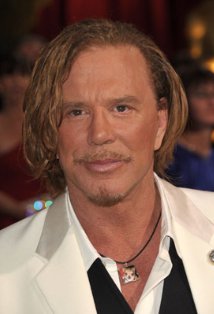
I completely agree with the praise for Mickey Rourke’s performance in The Wrestler. I can’t remember a film that so consistently and fully conveyed an actor’s heavy, weary topography; by its end you start to ache and shiver in sympathy. He plays Randy “the Ram” Robinson, a professional wrestler some twenty years past his best days, but still grinding, in sparsely attended makeshift arenas and promotional events, supplementing his income at a local grocery store. With his marriage long evaporated and virtually estranged from his daughter, his only vaguely meaningful relationship is with a stripper (Marisa Tomei), herself still going long after it made sense (if it ever did), but she strains to see him as much more than a customer.

Mickey Rourke

Rourke, of course, brings to this a back story easily capable of being seen as paralleling the character’s (whether or not it really does is another matter – down-and-out in Hollwood terms is only relative penury after all). He was one of the 80’s hottest actors, if not in box office terms, at least in his ability to capture the imagination of the more provocative directors. He worked for Coppola, Nicolas Roeg, Michael Cimino, Barbet Schroeder. This petered out in the early 90’s (Harley Davidson and the Marlboro Man seems to have been the main point of no return), and Rourke’s visibility became increasingly confined to tabloid reports of brawls and failed relationships and eccentric attachments to ugly little dogs. In recent years he’s had a few decent supporting parts (Domino, Sin City) and now finally found a director (Darren Aronofsky) willing to roll the dice big on him, although reportedly for little or no salary.

It’s only in its scale, perhaps, that Rourke’s narrative of feast and famine differs from hundreds of thousands of lives lived. It’s impossible to visit a small town without unearthing at least one whatever-happened-to narrative of the high school sports star and stud who never got much going after that. The financial bust may throw countless others into this narrative – fat times evaporating, never to be quite reclaimed in the same way. Aronofsky generally manages to evoke this universality while avoiding overt symbolism. One exception, contrasting Rourke’s humiliated but stoic walk to his new deli counter job with the past glories of his entrance into the ring, is witty enough to pass muster.

In scenes like this Rourke shows off a surprising nimbleness (even in his heyday, his dominant mode was dour/belligerent, with a hint of wounded). But his primary lot here is to suffer. Aronofsky stages several wrestling matches, and if that’s not Rourke himself being pounded and smacked and jumped on and torn open and pierced with a staple gun, then it’s real hard to tell. The authenticity of his suffering is really the film’s biggest single idea, and it makes sense when Tomei’s character mentions The Passion Of The Christ, another drama that beat up its protagonist for the best part of two hours. I was not a fan of Mel Gibson’s horrid film, seeing it mainly as a neurotic expression of its creator’s self-loathing. No such thoughts occur in The Wrestler, which somehow manages to map virtually every inch of Rourke’s flesh without seeming homoerotic or gloating.

Darren Aronofsky

That’s partly, again, because it’s all so plainly just a job. The film contributes some honorable anthropological insight in matter-of-factly showing the wrestlers’ pre-match negotiations on who’s going to do what to whom (thoughts arise that it could only possibly be a job for someone with a definite masochistic streak, but the film doesn’t go there). Aronofsky moves breezily through this – the film might not sound overtly commercial, but its pacing and packaging certainly owe more to a mainstream sensibility than to, say, self-defined cultural examinations such as The Secret Of The Grain. It’s still a canny move for the young filmmaker. He came to prominence with the super-smart low-budget Pi, and then made the traumatic Requiem For A Dream and the muddled, mostly derided The Fountain. He’s been mentioned, as most young directors are now, as a candidate to direct a superhero movie, maybe Robocop. Taken on its own terms, it’s a career many would kill for, but still, not very substantial in the overall cinematic scheme of things, and certainly not suggesting much artistic progression. The Wrestler is the kind of house extension that returns 100% on the investment.

Some of its elements are conventional, such as the overall relationship with Tomei and that with his daughter (Evan Rachel Wood), but not off-puttingly so. Tomei’s character, as I mentioned, is a parallel example of competing with the youngsters. The film has several scenes of her nightly humiliation, sometimes openly derided as an old woman, at others just rejected. Tomei has undergone her own travails, her Oscar for My Cousin Vinny often held up as one of the all-time silliest outcomes. But she plugged away and got a second nomination for In The Bedroom; after Before The Devil Knows You’re Dead, she may now be cornering the market on middle-aged nudity. She’s great in the role, but Aronofsky doesn’t seem much interested in the character beyond the comparison with, and what she represents for, Randy. Wood’s character has even less independent life, beyond a mild suggestion that she may be a lesbian.

Ongoing Possibilities

The bull-headedly fatalistic ending shares something with Clint Eastwood’s Gran Torino - in each, an old man embraces a point of no return. Gran Torino is more cartoonish in some ways, and certainly more conventional in its use of an established star image, but ultimately more audacious I think. One wishes The Wrestler resonated a little more, that it was about more than the man himself. The downside of Aronofsky’s respect for Rourke is that he almost squeezes all the fun out of the exercise (which, again, is why it’s so delightful when the actor gets to loosen up in that deli sequence). Quentin Tarantino’s revival of overlooked icons has been hit and miss (Travolta and to a lesser degree Robert Forster owe him a ton, but he couldn’t do much for David Carradine) and you wonder whether The Wrestler will really suggest to other filmmakers the ongoing possibilities in Rourke, more than it confirms the squandering of the old ones.

You can perhaps tell that my enthusiasm for the film, although genuine, is a little more respectful than I’d like; I don’t think it’s the kind of work that gets reactions tumbling out of you. But maybe this too is appropriate: if we reacted more robustly to Randy’s story, maybe that could only be at the cost of betraying his story’s very narrow, if unusually gaudy, parameters.

Friday, August 19, 2011

Jean Renoir

Jean Renoir was one of the greatest directors in the history of cinema. He was born in 1894, the son of painter Pierre Auguste Renoir, and started making films in the silent era, blossoming in the 1930’s with a remarkable series of eloquent, socially conscious works. La grande illusion, made in 1937, still stands as one of the finest pictures about war, and La regle du jeu, from 1939, has occasionally jostled with Citizen Kane for the crown of best film ever made. In the 1940’s, Renoir worked in the US for a decade or so, before a glorious return to Europe in the 1950’s. He made his last film in 1970, and died in 1979.

Renoir in America

Compared to some other great directors, it’s more difficult to convey anything of Renoir’s achievements in just a few sentences (even while allowing how such attempts are always hopelessly reductive). He’s often cited for the following observation in La regle du jeu: “There's one thing, do you see, that's terrifying in this world, and this is that every man has his reasons.” Actually, people often just cite those last five words, emphasizing Renoir’s good humour and empathy; the full quotation, of course, is much darker, acknowledging how society is a network of threats as well as of possibilities (one of his last pictures was a variation on the Jekyll and Hyde story). Renoir’s films often overflow with character and incident and interconnection, with a sense of delight and engagement that never becomes merely pictorial or indulgent. There’s nothing shrill or over-emphatic in his work; he coaxes out meaning rather than imposing it. The depth of his work, I find, tends to grow on you over time - again, even more than for any great director.

Renoir’s five American films, if not his very best, may form an obvious starting point for the uninitiated, and I recently rewatched two of these. The Southerner (for which Renoir received his only directing Oscar nomination, losing to Billy Wilder for The Lost Weekend) was made in 1945. It’s the story of Tucker, a poor farmer and his family, breaking away from the big local employer to make it on his own on an abandoned patch of land, keeping on going despite heartbreaking setbacks. Where La regle du jeu took place within an intricately established set of social and moral codes, The Southerner examines a country still being formed; when the aristocrats hunt in the former film, it’s mere ritual, but in the latter it’s for their basic survival. Already though, the sparse community has accumulated a store of myths and ideologies; the old grandmother constantly recalls how things were even tougher in her own younger days, and Tucker is constantly tempted by his best friend to join him on the factory floor, where he’d earn the unimaginable sum of $7 a day. Most instructive is the character of Devers, a prospering farmer on the adjacent plot of land; he despises Tucker on sight, deriding him as someone with ideas above his station, even though Devers fought his way up in much the same way. Later on it comes out that Devers wanted the land for himself, and Tucker’s intervention is blocking his dreams of greater capitalist achievement. Looked at now, you see an omen there of how profoundly America’s vision of itself as the land of achievement would be poisoned by vested interests and a calcified sense of entitlement.

Renoir in America

For now though, the film is primarily optimistic, allowing a truce between the two antagonists on the basis of a shared interest in catching a local catfish, and finding unambiguous nobility in the belief of the next season being better than the last. At the same time, the ending acknowledges the farmer’s dependence on those confining factories for the plough and the rifle and much else that fuels the dream. Every man has his reasons, and in such a time and place, they’re rendered particularly stark.

A couple of years later, Renoir made the lesser-known The Woman on the Beach, a very strange and rather lonely piece. It’s essentially a triangle of desire, constructed around a troubled coast guard (Robert Ryan), a great artist who’s now blinded (Charles Bickford) and the artist’s wife, a self-described “tramp” who severed her husband’s optic nerve with a bottle during a drunken fight. In The Southerner, Renoir immersed himself brilliantly into a culture far removed from his own, but The Woman on the Beach starts with a weird, turbulent dream sequence and plays out in a largely deserted, almost abstract environment, owing relatively little to naturalism. The closing stretch feels as much like a dramatized psychology manual as a cinematic narrative, but up to then it’s remarkably spare and haunting, a film noir carved out of sand and loss.

The River

The River, made in 1951, forms a bridge of sorts between the American-set films and the subsequent return to Europe. It’s also in English, but set in India, and it was Renoir’s first film in colour. It’s a simple story of an English family; the father owns a factory and the mother essentially has one child after another; the oldest girl develops a crush on a military officer who comes to stay next door. India’s majestic complexity and serenity (at least as depicted here; the film doesn’t claim to be sociologically all-inclusive) interacts with the girl’s growing uncertainty about her place in the world to form a gorgeously rich meditation on the journey toward self-understanding and acceptance. As I mentioned, The Woman on the Beach deploys dreams to dramatize inner fractures; when The River uses fantasy, it’s an illustration of the multiplicity of possibility and the capacity for self-invention.

At other times, the film is surprisingly raw: a father muses out loud – not unkindly – that maybe it would be better if his Anglo-Indian daughter had never been born (she matter-of-factly observes simply that she was born) and later – when a young boy is killed by a snake – opines that maybe it’s not so bad if the occasional child escapes submitting to the restrictions of adulthood. Such statements, of course, would conventionally be viewed as “incorrect” if not reprehensible, but in The River we understand them as being rooted in a deep humanity, expressing itself by searching the boundaries of things.

Freedom is vital to Renoir’s cinema. La grande illusion is about escape from confinement, and in one of his last films he revisited the prison camp through a protagonist who won’t stop escaping. The closing scenes of his final film, Le petit theatre de Jean Renoir, have a town coming together to celebrate an unconventional domestic arrangement. But he’s always aware of the inherent limits of such freedom, and of those of the frail humans who seek to attain it. If you look to cinema to inform and enrich your ideas on how to live and love and think, Renoir’s films are a necessary destination.