Thursday, February 26, 2015

December movies, part two


(originally published in The Outreach Connection in December 2005)

Ballets Russes is a documentary about the performing institution that popularized ballet in America from the 30’s to the 50’s, told through some wonderful archival footage and many interviews with the principal dancers (many of whom happily survived at least until recently), including a 2000 reunion. I am not any kind of ballet fan, but the film has great material – behind the scenes clashes, breakups, wartime turmoil, adventures in Hollywood, and so forth, and it’s so engaging that it’s only afterwards that its limitations really occur to you. For example, the old footage is seen (perhaps out of necessity) only in fragments, concentrating far more on providing glimpses of key figures than on illustrating technique, form or overall shape – our sense of the company’s artistry emerges in the telling much more than in the showing. There’s an intriguing social history there, of the popularization of the cultural form, but this too seems secondary to the film’s celebratory purpose and must be constructed in bits and pieces. And the brief anecdote of the company’s first black ballerina, who aroused such hostility in the South (including a backstage Klan visit) that she eventually had to leave the company, only points up the absence of such weight elsewhere in the film. To a certain (likely the larger) section of the audience, all of this will of course not matter at all, and as I say, it didn’t matter that much to me either as I watched it. The personalities are terrific, and if the movie’s techniques are conventional, they’re executed with much grace.

Three…Extremes

Three…Extremes is made up of three squirm-inducing stories directed by Park Chan-wook (Old Boy), Takashi Miike (mainstay of the film festival’s Midnight Madness section) and Fruit Chan. The first, by Chan, is called Dumplings – place your bets for what they’re made of. The second, by Park (a director whose work I’ve yet to warm to, despite the Tarantino-led accolades), is about a film director terrorized by an extra, and Miike’s third is the most dream-like and intriguing, as well as probably the cleverest. Like most compilation movies, the cumulative impact is relatively limited – no matter how well crafted the episodes are, they’re pretty much confined to putting across the premise and then getting off the stage. But variations across all three segments on the themes of self-disgust and macabre family dynamics lend it a broad feeling of coherence, and obviously it’s never dull.

By the way, I watched Ballets Russes and Three…Extremes on the same Sunday afternoon. Isn’t diversity a great thing?

I didn’t much enjoy the stage production of The Producers when I saw it in Toronto a couple of years ago, although many said it was hampered by weak casting of the two leads. There’s no question it felt dead at the centre, although it was difficult to imagine how high the tacky material could ever be elevated. The new film version, directed by Susan Stroman (who was also at the helm for the theatre – this is her first film), confirms all these doubts. Like the film of Rent, the movie suffers from woefully inadequate strategizing on what a meaningful cinematic version might actually consist of, but it’s not as facile as Rent in (to some degree) covering that up with superficial energy and glitz. The early scene where Nathan Lane’s crooked producer meets Matthew Broderick’s buttoned-down accountant and quickly starts to lead him astray is shockingly drab and lifeless (that stuff about the blue blanket is surpassingly lame), plunging the movie right into the hole.

It’s A Flop!

The main casting innovation, Uma Thurman as the Swedish bimbo actress, similarly strikes out – Thurman simply can’t lower herself into this with sufficient conviction (the only mystery is why she felt inclined to try). The less estimable performers do better. Will Ferrell’s genetic predisposition to shtick works fine here, and I must admit to getting my biggest laughs out of Gary Beach (who won a Tony for this) as the outrageously camp director, particularly during the Springtime for Hitler routine, which all these years later remains pretty surefire. But these are slim pickings indeed. My mind wandered to other musicals, not to the likes of Minnelli or Donen (which would be not so much wandering as inter-galactic leaping) but rather – I admit oddly – to Michael Ritchie’s filming of another Broadway mainstay, The Fantasticks. Ritchie’s movie was panned and never properly released, although I caught it once on late night TV. That one’s a choppy and often threadbare film (the Internet movie database has a long list of scenes that were cut from it), but it has some moments of beauty, perhaps all the sweeter for their obviously problematic context. It feels like a movie someone at least cared about making.


Thomas Bezucha’s The Family Stone is ultimately a little disappointing as only a very good film can be – it’s so very smart and accomplished that you’re frustrated at its failure to be a masterpiece. The elements of that failure are pretty clear. The film is about Christmas at a rambunctious liberal family, where the eldest son (Dermot Mulroney) brings home his girlfriend (Sarah Jessica Parker) for the first time; they’re loose and liberal; she’s neurotic and uptight…a disaster looms. The cast includes Diane Keaton, Claire Danes and Rachel McAdams, all excellent. I haven’t smiled or chuckled as much in any film this year (no laughs out loud though), and the sentiment got to me too. And a dinner scene where Parker puts her foot in her mouth all the way up to her thigh is just about the squirmiest thing I’ve seen all year, including those giant insects in King Kong.

Turbulent Blessings

And yet…even that fine scene seems a little contrived and overwritten, pushing Parker’s ineptitude way beyond the point where someone in her situation would have figured it out and shut it down (or else had someone step in to shut it down for her). The film ultimately succumbs to an extreme desire for tidiness, arranging for several unlikely and under-dramatized character pairings, and tacking on a sentimental one-year-later epilogue. And it doesn’t really have much to say about anything at all, except the same old stuff about the turbulent blessings of family. I thought as a counterpoint of one of my favourite films of the year, Agnes Jaoui’s Comme une image (Look At Me), which was similarly well-constructed and accessible and pleasant and unobtrusive in its style, but which (like Jaoui’s previous film The Taste Of Others) seemed continually philosophical and probing about the interaction of the social and the personal. Even Jaoui’s titles are beautifully resonant in a way that The Family Stone just isn’t. I see that I’ve laid out the film’s faults in much more detail than its virtues, but that’s my own evocation of family for you – always playing up the negative.

Sunday, February 22, 2015

December movies, part one


(originally published in The Outreach Connection in December 2005)

Ushpizin (The Guests) is an Israeli movie, directed by Giddi Dar. It’s a tightly knit tale of faith and tradition, built around a familiar structure of a disruptive guest; in this case two escaped convicts who turn up at the house of a former wastrel now turned (fallibly) devout, on the eve of a sacred festival. The film could have been almost unbearably self-righteous and stuffy, and sometimes shows signs of heading that way; it’s governed largely by idealism. But it’s truly deeply felt, and it accumulates a lushly earthy feeling (one has to admire any picture in which the climactic eating of a lemon carries a real emotional clout). The central character is a far more subtle creation than he initially appears, and the milieu is skillfully enough conveyed that even a distinctly secular viewer might be persuaded by the construct of God as participating equally in the action with the human characters. And as with many such films, I can’t help but cite the anthropological interest as a major attraction in itself. It’s a trite thing to say, but it’s all an education.

Karen Kusama hasn’t made a film since her promising debut Girlfight, and Aeon Flux is a surprising return vehicle – a big budget science fiction thriller with Charlize Theron; it’s set in the last city on 25th century Earth, and she’s a rebel going up against the stifling leadership (it’s quite similar in many ways to the recent The Island). The film received attention mainly for canceling its press screenings – a notorious sign of a panicking studio – and indeed it's not very good; it’s monotonous, with poorly handled action sequences. Beyond the images of Theron in her skin-tight costumes, it blows any possibility of being a modern-day Modesty Blaise or Barbarella – it’s full of gimmicky stylistic ideas, but they don’t cohere into anything interesting, I suppose an action film reflecting a feminine sensibility is still a relatively rare item – the general tone here is much more nurturing, empathetic, and plain soft than you’ll get from most action packages, but in this context that seems as much a sign of resignation as subversion.

Good Night, and Good Luck became the only second movie this year that pulled me to a quick second visit (2046 was the first). It again struck me as impeccable in virtually every respect (although I'll admit that the second visit didn’t yield the additional layerings that one expects from the greatest of films). If there were an Oscar for overall contribution, George Clooney would surely be the winner for this year. On the one hand, Syriana communicates the corruption and bastardized idealism underlying global politics; knowingly complicated and sometimes impenetrable, it barely allows the faintest scope for optimism. Meanwhile, the Ed Murrow movie looks back fifty years, excavating some of the roots of our craven capitulation – our willingness to submit to easy gratification and insulation – and imprinting a profound sense of loss, but not without a romantic wistfulness that may leave the viewer with at least a fleeting sense of determination.

I can name only a handful of moments in Good Night, and Good Luck that I'd possibly want to change. One of those is the scene of Murrow asking the young Liberace (in real archival footage) if he hopes to get married one day, and the pianist’s carefully worded response about hoping to find “the right mate. “ Compared to the film’s overall subtleties it seems like an easy laugh, although even this has its place in establishing the era’s hypocrisy and repressiveness in personal matters, and thus in diluting any possibility of reading the movie as being largely unfiltered nostalgia.

The Chronicles of Narnia: the Lion, the Witch and the Wardrobe has been closely pre-scrutinized in some circles, not because anyone needs another big-budget fantasy blockbuster, but for its adherence to the Christian subtext of C. S. Lewis’ source novel (which I haven’t read); if you don’t know, it’s about four children who tumble through a magical wardrobe into a wondrous realm of talking animals and strange creatures, where they are quickly greeted as the instruments of a prophecy that will defeat the evil ruling the land. As directed by Andrew Adamson (Shrek) it’s a very smooth creation with an even-handed and matter-of-fact tone, effortlessly blending the real and the digital: you suspend your own disbelief as effortlessly as the children do (for example, they adapt to the Cockney beavers within a couple of minutes). So what about that big issue? Well, sure, the subtext is there if you want it, and to my inexpert sensibility it seems pretty respectful. In particular, when the lion Aslan sacrifices himself for the forces of good and is later reborn, that’s kind of reminiscent of…well, you know. What the actual value of that recognition is, well, that’s beyond me. Maybe it’s just about reinforcement through repetition (I guess it’s also pretty exciting when the face of Jesus shows up on a potato chip). Although what big budget fantasy epic doesn’t lay on the higher power backdrop – from Star Wars’ Force through the Matrix and so on…

The film is too restrained, and in truth its young actors are a little too inexpert, for the themes of good and evil to carry much visceral weight. And the eagerness of the inhabitants of Narnia to idolize their human visitors seemed to me as plausible an allegory for an unelected monarchy as for anything less earthly. No matter. It’s a colourful, engaging, thankfully unportentous film.


If the chatter at my office is anything to go by, Memoirs of a Geisha, rather than Narnia or King Kong, was the season’s most anticipated release – looks like a lot of people (and yes, I mean women) loved that book. I haven’t read it, but I’m confident it would never have caught on as it did if it had been as affectless as Rob Marshall’s movie. Marshall seems at home with the easy spectacle, although even then his approach is conventional.  But he seems to hold his fine lead actors at arm’s length (Gong Li in particular seems game for something much more full-blooded) – not helped by the ill-fated decision to avoid subtitles and use English dialogue. The movie is overly discreet about the nature of being a geisha – one could easily come away with the impression that the requirement is to have sex just one time in a career, and to spend the rest of the time tiptoeing around serving tea. The portrayal of the protagonist’s decline during the war is rushed, robbing the thing of any overall dramatic shape. And her great romance – with a much older man she first meets at the age of 9 – merely seems creepy and distasteful. The movie has reasonable craft, but lousy instincts.

Thursday, February 12, 2015

Best of 2005


(originally published in The Outreach Connection in December 2005)

Several of my very favourite commercial releases this year barely qualify as that – they played at the 2004 film festival and then at the Cinematheque. And Head-On played only one or two nights at the Goethe Institute, before making a low-key one-week return later on. Still, you take your movies where you can. Apologies to any masterpieces released right at the end of the year. Here’s the list.

The World (Jia Zhang-ke)
This was my introduction to the work of Chinese auteur Jia - I didn’t see his acclaimed film Platform until later. The World - focusing on a young boyfriend and girlfriend, both working in a Beijing theme park filled with scaled-down replicas of world landmarks - is an engrossing work, illustrating a China in transition, touching on its persistent poverty (especially rurally), its abiding mystery and its banality. It’s a melancholy film, but it’s also filled with humour and incident and is a continuously fascinating work of anthropology – it’s particularly attuned toward women and the forces that drive them toward merely superficial advancement, ornamentation or even prostitution.

Cafe Lumiere (Hou Hsiao-Hsien)
What a pleasure that CafĂ© Lumiere (dedicated to Japanese master Yasujiro Ozu) is the most narratively accessible of the Hou films I’ve seen. It follows a young woman, three months pregnant and just back from Taiwan, as she criss-crosses Tokyo, visiting parents or friends, working on a research project, but most often simply seen in transit. Both thematically and in its technique, the film seems to be about self-definition and its contingencies and choices. This subject might have entailed Hou’s most diverse, ambitious canvas yet, but he responds instead by honing down to his simplest, purest film.

Moolaade (Ousmane Sembene)
It’s amazing that this year brought a new film by Sembene, the pioneer of African cinema. His astonishing Moolaade, if it turns out to be his last film, will stand as a triumphant summation of his career. It’s simple in its technique, with the unadorned clarity and straightforward quality of a children’s story (although its subject is genital mutilation), but it exposes both the beauty and brutality of Africa with powerful eloquence.

Comme Une Image (Agnes Jaoui)
Jaoui’s follow-up to The Taste of Others revolves around an essentially monstrous author and publisher and a group of characters whose spiritual health lies in the distance they manage to put between themselves and him. The film understands that such monsters are created as much by the structures around them as by rampant pathology; the title suggests how identity is as much social as personal. The film always stays in familiar, easily assimilated territory, it’s unobtrusive in its style and acted in a pleasant register, but it’s entirely scintillating, examining in surprising detail a range of shifting tastes and possibilities.

2046 (Wong Kar-Wai)
Wong Kar-Wai’s 2046 is an astonishing work of cinematic design – one of those films that rapidly exhausts your powers of absorption on first viewing. The director reportedly reedited the film continually over a period of several years, and the result is an extraordinarily intricate tapestry of memory and association. It takes off from Wong’s In the Mood for Love, based around the same late 60’s Hong Kong setting, but the canvas now involves multiple women, multiple moments of loss and regret, and an occasional evocation of future worlds. The film uses time as an accordion, thrilling you with its structural sophistication; it’s also emotionally enthralling and immensely evocative. This was the only film this year that I felt demanded an almost immediate second viewing.

Junebug (Phil Morrison)
This is a low budget film about a North Carolina family when the eldest son, who long ago moved away to Chicago, returns to visit, with a sophisticated new wife. It’s an astoundingly subtle picture, spare but perfectly weighted, accumulating a remarkable series of implications. No recent film better portrays the “American heartland” so often referred to – George W. Bush isn’t mentioned in the movie, but it tells you everything you need to know about how he gets away with it – and it’s a borderline-horrific portrayal of family dynamics. The film is ambiguous enough that it could alternatively be read as a light, quirky semi-comedy (it works just fine as such) – as such it’s a masterful prism for prevailing complacency, and a great achievement by the unknown Morrison.

Good Night, and Good Luck (George Clooney)
I loved George Clooney’s highly disciplined account of how CBS News took on Joseph McCarthy in the 1950’s. The impeccably controlled David Straithairn is mesmerizing as Murrow, and despite the film’s stripped down air – it focuses almost entirely on work processes (flawlessly fusing new and found footage), runs only an hour and a half and seldom moves outside the newsroom or a few other bland interiors – it’s distinctly romantic and even subtly mystic. Between this and the gloomier Syriana, Clooney certainly deserves some kind of recognition for the year’s most striking overall contribution.

Head-On (Fatih Akin)
This is a fascinating, often fiery movie about the marriage and love affair (in that order) of two German Turks. It initially seems almost like a distended commentary on the impossibility of transcending one’s roots, but works an unpredictable way toward a universal poignancy that almost evokes Casablanca; sometimes it seems too simplistic in how it lays out various tensions for our examination, but few films have such constant feisty variation and vigour.

Broken Flowers (Jim Jarmusch)
This laconic tale of so-laidback-he’s-hardly-there Bill Murray visiting a stream of old girlfriends has an easy sweetness, bolstered by wonderful performances from all concerned. For some of its length it’s a little underwhelming, with the director’s deadpan minimalism seeming like an affectation rather than a meaningful worldview. Ultimately though it all comes together, placing Murray at the centre of a significant perception shift, and allowing you to see the craft and nuance behind the movie’s every element.


The Family Stone (Thomas Bezucha)
Bezucha’s debut film - about Christmas at a rambunctious liberal family - is ultimately a little disappointing as only a very good movie can be – it’s so very smart and accomplished that you’re frustrated at its failure to be a masterpiece. Comme une image is a particularly useful reference point in demonstrating how The Family Stone is ultimately insufficiently philosophical and probing, and ultimately succumbs to an excessive desire for tidiness. But I haven’t smiled or chuckled as much in any film this year, and the sentiment got to me too. So it makes the cut.

Among others that might have made it:  Nobody Knows, Los Angeles Plays Itself, War of the Worlds, Saraband, Yes, Grizzly Man, A History Of Violence, Brokeback Mountain, King Kong (yes!) and lots of movies in the tier just below that. And now on to 2006, with Match Point and The New World already in our sights. Not to mention that Disney movie about the eight huskies that get stranded! Happy New Year!

Thursday, February 5, 2015

Christmas movies


(originally published in The Outreach Connection in January 2008)

What kind of title is that - Christmas Movies? Wasn’t that a long time ago already? And Tamara Jenkins’ The Savages didn’t deliver much seasonal cheer. An old man’s long-time girlfriend dies and he’s suddenly homeless, with escalating dementia. His two middle-aged children, who he’s hardly talked to for years, need to sort out his future, even though they can hardly handle the basics of their own lives. Played by Philip Seymour Hoffman and Laura Linney (so, obviously, there’s no problem here on the acting front), they are both intellectuals with an interest in theatre, both up against a severe ceiling in their careers and emotional lives (someone pointed out that their names, John and Wendy, evoke Peter Pan, the boy who never grew up).

The Savages

The title refers to their surname, but also indicates the unusual chilliness of the approach. There’s no easy sentiment here, no last-minute making up for lost time. The father (played by Philip Bosco) is kept rather distant within the film’s scheme; John barely betrays a moment’s real emotion at the situation, and although Wendy is more demonstrative, she never seems to be engaging with the individuality of the old man before her. The movie isn’t static – they both move ahead, but just in the way that life incrementally nudges you forward.

It’s broadly classifiable as a comedy (Jenkins’ only previous film, the very good Slums of Beverly Hills, was more plainly that), but most of the laughs are of a low-key and rather desperate quality. The only conventionally “pretty” shots in the film come at the very start, portraying an Arizona retirement community, but that’s quickly revealed as an enclave of hypocrisy, having little to do with most people’s experience of old age and death (summed up by Hoffman in a stinging outburst). Almost everything else looks ugly and tawdry. Ultimately, the film’s depiction of old-age dilemmas is more convincing and wrenching than, say, that of Away From Her, but the toughest punch is one of indifference; even at his darkest hour, there’s never a sense that the old man’s plight matters more to his children than their own.

Enchanted

I eventually got round to seeing Kevin Lima’s Enchanted  - given my Grinch-like aversion to sitting among a bunch of happy kids, I needed to wait until the theatres had mostly cleared out. As it was, I’m sure I was as happy as any of the kids, although it may not have showed up on my face as much. This is the movie about a cartoon princess from a classic fairy tale kingdom, sent by a wicked witch through the vortex into modern-day Manhattan. It’s a culture shock, but her sunny attitude never wavers. She falls in with a single dad and his wide-eyed kid, while waiting for her handsome prince to come rescue her.

As G-rated movies go, this isn’t Ratatouille - it’s not thematically ambitious, and doesn’t have the superb overall shape of that animated marvel. But it’s still one of those creations that make you marvel at the current state of the medium. The technology and the coordination dazzle you, but it’s also on top of the basics –the script keeps things light and funny without getting crass, and everything’s primed to spread happiness. The scenes in the middle of Times Square, the arrival point from the other world, don’t seem quite integrated into the rest – they feel more like Letterman stunts – but it just adds to the charm.

Amy Adams, who was Oscar-nominated for Junebug, seems to me a little old for the princess role (she’s 33), but brings immense conviction to it. Even if the movie wasn’t as well executed, she’d go a long way to convincing you otherwise. Ultimately, Enchanted does a better job of making you believe in the power of true love’s kiss than, say, Michael Moore’s movies do on selling their various agendas. Doesn’t that sound like a Christmas movie, speaking secularly of course?

Charlie Wilson’s War

Adams also turns up in Mike Nichols’ new film Charlie Wilson’s War, trailing sunnily behind the eponymous congressman as he manoeuvres through the corridors of 1980’s Washington power, with side trips to the Middle East. Based on a true story, although who knows how closely, it’s the account of how Wilson, a congressman at the time better known for character flaws than leadership substance, spearheaded the effort to adequately arm the Afghan mujahedeen against their Russian occupiers (he saw a Dan Rather report on TV while hanging out naked in a hot-tub with some coke-snorting strippers, and it caught his imagination).

Nichols is as polished and smooth a craftsman as they come, and the film is written by Aaron Sorkin, who proved with West Wing that he can create a compelling, highly articulate illusion of how important things work. Remarkably for such a sprawling subject, it runs barely more than an hour and a half, and is cast with three major league Oscar winners: Tom Hanks as Wilson, Julia Roberts as a Texan society woman who attaches herself to such noble causes, and (most quirkily and indelibly) Philip Seymour Hoffman again, as a CIA operative. There’s obviously major compression going on here – even the most sensitive negotiations are dispensed with in a breezy five minutes – but one assumes we’re getting the story’s major arc at least.

What we’re ultimately looking at, of course, is the birth of the armed radical Moslem movement that led to the Taliban and beyond. This is acknowledged in the film, and after his military achievement we see Wilson trying to squeeze much smaller sums out of Congress for education and reconstruction, without success (by then everyone’s preoccupied with “restructuring Eastern Europe”): the movie ends on an unprintable version of the adage about winning the war and losing the peace. The ongoing relevance of this hardly needs to be underlined.


Still, Charlie Wilson’s War isn’t a movie that arouses anger. This leads to dismissals such as James Rocchi’s: “There’s subtlety, and then there’s invisibility…(the film) is timid where it should be reckless, clever where it should be cutting, funny where it should be fierce.” True enough, and Hanks, although very effective, would probably have given much the same performance if recreating the Dean Martin Variety Hour; indeed, the film’s best sequence, involving lots of frantic movement between one room and the next and intertwining conversations, is pure farce. One also wonders about the apparent use of real amputee children in the scene where Wilson visits a refugee camp; the sequence affects us as it does him, but Nichols hasn’t figured out how to fuse such raw stories of pain with Hollywood glamour without seeming rather gauche.

In other areas the film executes classic Hollywood velvet glove manoeuvres, such as in the gentle handling of Pakistan’s President Zia. It’s probably fair to conclude that one should approach the film with skepticism, but you’d miss out on a good time if you didn’t approach it at all. Kind of like Christmas!

Wednesday, January 28, 2015

Watching Welles


(originally published in The Outreach Connection in July 2006)

Near the start of his 1973 documentary F for Fake, having already established the film’s preoccupation with charlatanism and trickery, the film’s director and narrator Orson Welles delivers a sober promise to the camera: that for the next hour, he will tell us only the truth. With this established, the viewer settles into the film’s discursive approach to its material, focusing on master art forger Emile de Hory and the author Clifford Irving (who wrote both a biography of de Hory and then an alleged autobiography of Howard Hughes, itself later revealed as a fraud) while digressing in multiple directions – back to memories of Citizen Kane and Welles’ famous War of the Worlds radio broadcast, into scenes of Welles having dinner, and frequently into footage of Hungarian model Oja Kodar (Welles’ lover for the last twenty years of his life).

F for Fake

Eventually the film narrows into a single extended anecdote about Kodar, her grandfather (also an art forger) and Pablo Picasso – a strange story for sure, but no more than anything already laid before us. After its apparent conclusion, Welles suddenly starts to back pedal, disowning elements of what he’s just been telling us, and then he refers back to his promise about that hour of veracity. “That hour, ladies and gentlemen,” he then announces, “is over. For the last seventeen minutes I’ve been lying my head off.”

It’s the kind of thing that can only work once, and nowadays in a more skeptical, wised-up world, it might not work at all. But when I first saw F for Fake, at the age of sixteen or so, I remember being utterly stunned. It was a moment that fundamentally influenced my sense of cinema – maybe it was even the moment when I realized the passivity of how I’d been watching films, and the inadequacy of that. Over time one’s views of things evolve and shift of course, so that at the extreme Welles’ ruse might almost seem to unbalance the film – it says more about his self-dramatization than about the movie’s ostensible subject. But Welles’ obvious delight in the material is one of F for Fake’s great pleasures, and the degree to which the director may or may not reveal himself between the frames is the real issue on which a certificate of authenticity might be demanded. As a director who traveled the world with his editing table, and who created dazzling juxtapositions and leaps in F for Fake, Welles obviously knew in the first place that the concept of an “hour of truth” in cinema is hopelessly compromised.

In my 1,100 or so words here, I can say nothing of interest to those who know and value Welles’ work, but in casual conversations at work recently I’ve realized again how small that group is. I wrote about Welles some five years ago, but on that occasion I concentrated mainly on Citizen Kane. No apology necessary for that. As I wrote then, Citizen Kane tends to be a film that everyone knows about and knows to be great, but which few people have actually seen (or if they have seen it, they often seem not to know what the fuss is all about). And the later films have little prominence in the popular consciousness.
 
One Man Band

Five years ago I referred to “numerous unfinished Welles projects that have become more famous than other directors’ finished works. Most famous are Don Quixote, The Deep, and above all The Other Side of the Wind, a mid-70’s expose of Hollywood that sounds strange and twisted and utterly brilliant…and will probably never be seen. This odd shadow career is unprecedented in an art form that depends so much on logistical planning and having the money in place – you weep at a creative force so often thwarted.”
 
Well, I now see that a little bit differently. The Criterion Collection’s DVD of F for Fake has one of the most wonderful extras of any DVD I’ve ever come across – the documentary Orson Welles: One Man Band. This features two scenes from Other Side of the Wind (both stunning) and others from an unfinished Merchant of Venice and a barely started version of Isak Dinesen’s The Dreamers, among others. And then there are items I could never have imagined, such as some comedy skits filmed in Britain in the 60’s and 70’s that allow Welles to indulge his love of playacting for no great artistic purpose. Which merely makes them all the more endearing. Oh, and then there’s the talk show pilot he filmed with The Muppets.

The most common reason for this trove of loose ends is just that Welles didn’t have the money to finish the projects, or else only got raised from shady and unreliable sources (Other Side of the Wind was seized by its Iranian financiers, and remains tangled up in murky circumstances). There’s also some sheer bad luck – supposedly the negative of Merchant of Venice was stolen when nearly completed, and no one knows where it went. But it’s plain that Welles’ restless creative energy maximized the possibilities for such mishaps. While he was making F for Fake, he took on the strange side project of filming himself reading aloud from Moby Dick. Thankfully, F for Fake was finished nevertheless. But chronologies of his work reveal a strange pattern of overlaps and deferrals and fragmented involvement, not like that of any filmmaker I’ve ever known of.

Spontaneous Joy

It would be trite and foolish to say we’re better off this way, but One Man Band makes it joyously easy to make the best out of what we’ve got. Citizen Kane challenged preconceptions by deploying certain tools of Hollywood studio cinema more imaginatively and richly than anyone had before, and then misfortune immediately set in. Welles made The Magnificent Ambersons then was sent to Brazil under the umbrella of the wartime effort to make It’s All True. In his absence, the studio butchered Ambersons, and the legend of squandered talent was already seeded. Thirty years later, such incidents were endemic to Welles’  - I was going to say career, but that word has a sense of linearity that doesn’t seem right here. I suppose I should just say his life.


We have plenty of examples of great filmmakers who prepare meticulously and take years between projects, and who consequently make fewer films than we (and in at least some cases they) would have hoped – Kubrick, Malick, and so forth. In a way, Welles’ late career speaks to too much spontaneous joy in cinema, to an undimmed thrill at new ideas and possibilities. His glorious fragments make other directors seem confined by systems and expectations. Instead of weeping, as I suggested five years ago, I now think it’s a gorgeous legacy, with the loss of what might have been on screen outweighed by the challenge to our notions of what’s a full and successful career in cinema. All of this makes the F for Fake DVD one of the most amazing artifacts that I know of. I couldn’t recommend it to you more strongly.

Thursday, January 22, 2015

A movie from Bhutan


(originally published in The Outreach Connection in March 2005)

Travellers and Magicians is apparently the first feature film ever shot in Bhutan, and in my naive way, I wonder why this wouldn’t provide a reason for anyone – anyone at all – to choose to see this film over Hitch or Boogeyman or any of the other movies that kicked its ass, financially speaking, the weekend of its release. I mean, whatever one’s affinity for Will Smith or the horror genre (and I certainly bear neither of these any hostility), isn’t it somehow self-evident, for Chrissake,  that it would be more worthwhile seeing the first feature film ever shot in Bhutan!? Apparently not. When I say this kind of thing to people, they react as if I’ve veered into anthropology rather than cinema, and they’re not entirely wrong of course. I mean, I feel no urge to seek out the (presumably small) corpus of translated Bhutanese literature, so we all pick our poison. But still, Bhutan versus Boogeyman – it sure doesn’t seem like that close a call.

World Cinema

But you don’t always get the eye opening you expect. My personal emblematic recent experience of “Third World” cinema is Ousmane Sembene’s Moolaade, which played at last year’s film festival (and is coming to the Cinematheque). It’s a Senegalese film about female circumcision, and it’s a joy to watch, funny and accessible but driven by a completely different set of aesthetic considerations than we see in American or European film. I always hesitate to pronounce with confidence how much I’ve “learned” from a movie, but even if Moolaade were shown to be narratively and politically disingenuous (which I don’t think it is, but I don’t suppose it’s impossible), even the nature of the lie would be informative. The body of Iranian cinema falls into a similar category, and we’ve seen enough films from Iran now both to feel that we know something real about the country and to get a sense for the country’s cinematic conventions. If it’s only a “sense” on my part, that’s due to my lack of research and study; despite good intentions, I’m more of a tourist than a true traveller in these lands.

Rick Groen, in The Globe and Mail, cited Iranian cinema in his review of Travellers and Magicians, saying that director Khyentse Norbu “has clearly fallen under the influence of Iran’s neo-realist tradition – same theme, same casting” although he then notes Norbu’s greater visual opulence as an important difference. I would have said that that’s putting it mildly. Norbu studied politics and filmmaking in the US, and it shows. His film is about an “officer” in a remote mountain town who gets his chance to go to America, but only if he reaches a nearby town in three days’ time. He grabs his boom box and heads off, but when he misses the bus he’s forced to rely on hitched rides (this on roads that see maybe five vehicles a day). He meets up with other travellers along the way,  including a young woman who starts to grow profoundly on him, and a monk who tells a long, mystical (and vaguely parallel) story about a student magician falling under the spell of a mysterious woman. We see this story in episodes, shot in a gauzy style that contrasts with the main narrative’s sunlit exteriors.

The Grass Is Greener

Rather than Iranian cinema, the film that most came to my mind while watching this was Tom Cruise’s The Last Samurai, another lush piece of filmmaking pivoting on a familiar theme of a skeptical outsider gradually assimilated into an age-old tradition. The fact that the official here merely dreams of America rather than coming from there makes little effective difference – at the start he’s hyperactive, chain-smoking and stand-offish,  going to extremes to demonstrate his difference from the locals, and at the end he’s serene, integrated into the group. Several reviews identify the film as a cautionary fable on the notion of the grass being greener, but this is frankly not a very enterprising game plan, if you’re the first feature film from Bhutan. Norbu has talked in interviews about how spirituality informed the film’s making, but I simply don’t think this is particularly evident in what he generated.

The Bhutanese landscapes are wonderful, and we pick up a few details about the society, but nothing here challenges us or educates us. We've seen many films (or at least had the chance to see them) set at the intersection of old and new worlds (to pick merely the first that comes to mind, The Story of the Weeping Camel was nominated for an Oscar this year) and by that standard Norbu’s film is less anthropologically illuminating than its peers. The film uses non-professionals – for example, the first man he meets, an old apple seller, was apparently played by a genuine apple seller who had trouble understanding the whole concept of movie making, multiple takes and so forth. The apple seller looks authentic enough in the few close-ups of him, but I can see no substantive way in which it matters whether it was an actor or not – he’s not called on to do anything going beyond the fictional and decorative.

A First Step

The film has an ambiguous ending that seems too knowingly so – it seems to withhold easy closure not because it’s reached a point of complexity that warrants this, but merely for the sake of withholding easy closure. By which I mean viewers will merely wonder what happened next, rather than pondering some broader theme or insight.


I’m well aware that by this time the reader may be on the verge of crumpling up the paper in disgust, for it seems that I’m merely beating up on the weakest and most defenseless of victims – rather than sticking the knife into Hitch, what kind of perversity leads one to attack the first feature film ever made in Bhutan? I suppose my defense would have to be that if Travellers and Magicians’s value ultimately lies in its universality and accessibility, then we’re entitled to judge it by universal and accessible criteria. From my brief reading, Bhutan may truly be one of the world’s most distinct societies, and it’s a real shame that the film provides so little sense of it. A few weeks ago I criticized Don McKellar’s Canadian film Childstar for seeming to define itself too much with regard to an American reference point, but at least Canada has the excuse of geographical proximity and cultural similarity. Maybe it took someone like Norbu, schooled in American logistical savvy as well as its aesthetics, to take the first step for Bhutanese cinema, and this seals him a place in film history - a fair-sized footnote at the very least.  But it’ll take a little more to justify my initial assumption about its relative superiority to the fare at the multiplex.

Friday, January 16, 2015

Top Ten Films


(originally published in The Outreach Connection in July 2004. I subsequently updated my list here - it hasn't changed much since then)

The Australian website SensesOfCinema.com has a section devoted to lists of top ten films, and I like that kind of thing, so I sent mine in. Here it is:

Celine and Julie Go Boating              (Jacques Rivette)

Citizen Kane                                       (Orson Welles)

Dog Star Man                                     (Stan Brakhage)

The King of Comedy                           (Martin Scorsese)

Love Streams                                      (John Cassavetes)

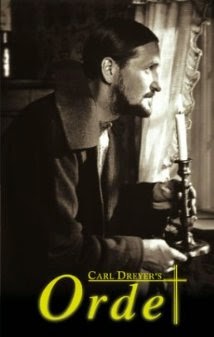
Ordet                                                   (Carl Dreyer)

Orpheus                                              (Jean Cocteau)

Playtime                                              (Jacques Tati)

The Passenger                                    (Michelangelo Antonioni)

Rio Bravo                                            (Howard Hawks)

I added the following note:

which of course fails to do justice to Hitchcock, Bresson, Pasolini and at least twenty others. If the object were to select ten films for a desert island, I would have to find room somewhere for The Umbrellas of Cherbourg and The Band Wagon.

A day later, at least half that list might have changed. For instance, I regret the omission of That Obscure Object of Desire and Bonnie and Clyde, and although I’m wary of placing too much weight on recent passions, I think it’s likely that Bamboozled is in fact one of my ten favourites. As for what I did include, I haven’t actually seen Celine and Julie go Boating for years, so I’m not completely sure it belongs on there. But the list had to include a Rivette movie, and this somehow seemed like the best one. Similarly, Dog Star Man represents my current passion for Brakhage as a whole. As I get less and less impressed with Scorsese’s current work, it feels on some level as though The King of Comedy should drop off the list, and yet it hangs in there.

Man of Culture

There are no silent films on my list (Metropolis or The General would probably come closest, but that felt a bit too dutiful) and nothing from the 30’s, but otherwise the distribution across the decades isn’t too bad. I wish there was something from there from outside the US or Europe – maybe seeing Ozu’s Tokyo Story again soon will push it up there. It’s a source of great joy to me to own seven of the ten on DVD (in addition to Celine and Julie, I eagerly await the release of Love Steams and The Passenger).

I guess this tells you, in a general sort of way, that my highbrow inclinations are palpable, but not yet overwhelming. Still, I admit that the list is conditioned in part by some abstract sense of what my list ought to look like. Once I was in Italy for a business thing, and the host, who sat next to me at dinner, turned out to be a film enthusiast (to add some colour to the story, he knew Liliana Caviani who made The Night Porter). We exchanged observations on Antonioni and Pasolini and Lindsay Anderson’s If and suchlike, and then he looked at me directly and said, “I must ask you a very important question. Do you like Fellini?”

With no hesitation, I gave the truthful response, which was: “No, I’ve never cared for Fellini.” He beamed – that was the right answer. “You are a true man of culture,” he said. He even agreed with me that Fellini’s Toby Dammit episode from Spirits of the Dead was the director’s best work (partly because it’s shorter than the others). I was as pleased as Punch with this (being called a true man of culture, by an Italian guy!) But since then, I’ve started to reassess Fellini upwards. I watched La Dolce Vita again a few months ago and was completely knocked out by it. But no matter what, I can’t imagine placing a Fellini film on my top ten list. It’ll never fit the image now.

The most conventional presence on my list is Citizen Kane, which has topped the best-established exercise of this kind (a critics' poll carried out every ten years by Sight and Sound) since 1962. Jean Renoir’s La Regle du Jeu seemed to be closing in on Kane, until Vertigo zoomed past it into second place in 2002 (Vertigo might be 11th on my own list). The 2002 Sight and Sound poll had The Godfather/The Godfather II in fourth place – Coppola’s achievement now looks increasingly like the very rare work that will stand as both a popular and a critical classic. The rest of the 2002 top ten looks like this: Tokyo Story, 2001: A Space Odyssey, Battleship Potemkin, Sunrise, 8 1/2 (Fellini!), Singin’ in the Rain.

Sight and Sound also carried out a poll of directors, which Citizen Kane also won, with The Godfather I and II in second. Lawrence of Arabia and Raging Bull are among the alternative choices on that list. Senses of Cinema provides various other polls as well, all but one of them showing Citizen Kane as number one (and the exception had it at second, behind La Regle du Jeu).

Time of Plenty

There’s also a “Best Movies of all time” website based on an amalgamation of various sources, which generates the following top ten: Citizen Kane, La Regle du Jeu. Vertigo, 8 1/2, Battleship Potemkin, Singin in the Rain, The Gold Rush, City Lights, L’Avventura and Schindler’s List . Spielberg’s film scores nowhere in most of these polls, but given the weighting system employed by that website, got in by virtue of winning the Oscar and various other awards (the same list has Ben-Hur as the 24th best film ever made).

Of course, the list-making exercise isn’t limited to highbrow circles. The American Film Institute has recently been drumming up good publicity for itself with various tabulations of best American movies. In its master list, Kane was number one, followed by Casablanca, The Godfather and Gone with the Wind – obviously following a more populist bent. And perhaps the most credible list of them all in a certain way, by virtue of the numbers of people contributing to it (over 100,000 voters for some films), is on the Internet Movie Database at imdb.com. The Godfather is number one there, followed – to me bizarrely, but you can’t ignore it – by The Shawshank Redemption. All three Lord of the Rings movies show up in the top ten, so I guess by this measure we’re living in a time of plenty. The only foreign movie in the top twenty is The Seven Samurai; Kane is 11th (just behind Star Wars).


I think the fleeting nature of watching films encourages this kind of exercise: making lists, scrapbooks, collecting memorabilia – it’s all a way of compensating for the intangibility of the thing itself, of providing some proof that we really invested all that time, that our memories have some basis in reality. I’m not much for collecting memorabilia, but as you can see, I’m into the lists, and for years now I’ve written notes, a few hundred words or so, on every film I see. Where that all gets me, I don’t know. Now, excuse me while I reconsider a few things.

Friday, January 9, 2015

More Christmas movies


(originally published in The Outreach Connection in January 2008)

The Orphanage is advertised as emanating “from the creators of Pan’s Labyrinth” – it’s “presented by” that film’s director Guillermo del Toro. That was one of the most distinctive and compelling films of the last few years: superbly visualized, expertly constructed, and completely mesmerizing; satisfying both as a muscular adult fairy tale and as a serious minded (if enjoyably lurid) depiction of the fascist psyche.

The Orphanage is also in Spanish, but certainly doesn’t make a comparable impact, not that it ever seems to hold that ambition. This belongs more to the old dark house genre, with a woman coming back to the former orphanage where she spent some of her childhood years. The place is creepy, teeming with dark secrets and traumatic memories, and then her own young son suddenly disappears, more likely a victim of the spirit world than the material one.

The film doesn’t go in for too many modern pyrotechnics, relying on old-fashioned atmosphere and suggestion, for which it’s perhaps been over-praised. It doesn’t really gather much momentum as a psychological study, and isn’t at all thematically distinctive, so after a while it’s all down to seeing how things turn out (like most else in the movie, the ending is fine, not a cop-out but no big deal either). This seems to be the first film by director J. A. Bayona, so we can safely label him as promising…he might turn into another del Toro, or on the other hand might get lost in the old dark house of Hollywood. It’s not very high on the list of film-related mysteries that might occupy us.

I am Legend

I am Legend perhaps has less of that old-fashioned right stuff, but it’s by far the more compelling and for that matter creepier film. Based on the Richard Matheson story previously filmed as The Omega Man, it has Will Smith as perhaps the last unaffected survivor of a viral disaster, left with daytime Manhattan to himself and his faithful dog Sam; at night, he barricades himself in his Washington Square house and hides from the others who made it through, as disgusting mutated vampires.

The movie’s excellently paranoia-bating curtain raiser has Emma Thompson as a scientist smugly announcing a cure for cancer; three years later, it’s this viral tampering that’s brought about the apocalypse. Obviously no more 9-11 generated restraint here; the movie’s most striking sequences, with the city serving as Smith’s personal playground, may represent the all-time greatest filmic example of making the best of a bad situation. Later on the genre wheels start to turn a bit more methodically, but it’s still good stuff. I couldn’t even start to recall all the antecedents that come to mind, although Dawn of the Dead, with its band of survivors holed in the temporary utopia of a suburban shopping mall, is a prominent one.

Smith is absolutely excellent in a mostly solo role, and the dog is one of the all-time memorable screen dogs (and may certainly have the all-time wrenching canine death scene – as a major dog sentimentalist, I don’t feel guilty for throwing out that spoiler). Except for some fake looking lions early on, it superbly deploys digital trickery in support of the grand illusion; like Enchanted, this movie feels like the master of its technology, where it’s often been the other way around.

The Great Debaters

If there’s any fancy digital stuff sneaked into Denzel Washington’s The Great Debaters, it’s certainly well hidden. This resolutely old-fashioned film has Washington as the coach of a black debating team in 1930’s Texas. After triumphing against virtually every black institution in the country, they make the leap to taking on white opposition, with their eyes on the biggest prize of all: Harvard.

Oprah Winfrey produced The Great Debaters, so you know this is intended as the kind of film that’s good for you. But it actually is. A lot of the storytelling is distinctly run-of-the-mill, but the film is an honorable and handsome memorial for the period when extensive civil disobedience for the cause of black equality was still several decades away; it depicts a lynching and various threatening situations, as well as subtler but pervasive day to day slights and belittlements. I spent a good chunk of it in a state of anger, and a good chunk more getting teary (and sometimes both at once, which I guess would count as hitting the jackpot). Sure, that doesn’t particularly validate the film as top-quality cinema – a few times a year I see a film that plays to a somewhat different set of faculties and this was one of them.

Washington is absurdly charismatic in his own role, but as a director he doesn’t stretch anyone else in the cast too much (fellow Oscar winner Forest Whitaker plays too much to stereotype as a fire-and-brimstone type, although he and Washington do have a good scene together). The movie also doesn’t exhibit much interest in women, an unfortunate mismatch given its overall intentions. I can understand the dismissive reviews it got in numerous quarters – I love the art of cinema, not just motion pictures - and I don’t want to be pious about it, but it makes more sense spending time on The Great Debaters than various objectively better films I could mention. I was going to give examples, but maybe I’ll stop before too much of whatever credibility I have flies out the window.

The Diving Bell and the Butterfly

Julian Schnabel’s The Diving Bell and the Butterfly is a piece of cinema for sure, and incidentally exhibits ample interest in women. It also provides a good example of the limitations of The Great Debaters’ conventional recreation. The centre of it is Jean-Dominique Baudry, a former editor of French Elle magazine who was struck down in his early 40’s by “locked-in syndrome,” rendering him unable to communicate except by opening and closing his one good eye. Amazingly, Baudry dictated an entire book in this condition, which was published to acclaim in 1997.

Schnabel’s previous two films were about artists on the fringe, and this film is in effect a tragic extension of that theme: left with little more than his memory and imagination, Baudry’s inner life soars, and the film goes with him. Schnabel makes great use of a subjective camera to depict his inner state (audaciously, the first fifteen minutes or so are entirely shot that way), and constructs the picture around powerful dynamics and contrasts: between current immobility and past exuberance, the stark interiors of the hospital and the intense but fragile freedom of the imagined butterfly.


The film is generally in the triumph-of-the-human-spirit mode – it’s not sugar-coated, but by inclination it spends much less time on Baudry’s pain, and on the monotony of such helplessness. This is reasonable in that the frustrations of his condition can merely be stipulated, but it still limits the film’s overall emotional impact. But the subject matter is extreme and idiosyncratic enough to slip past normal expectations of verisimilitude or comprehensiveness. The film conveys an enormous sense of contentment and inner ventilation, as if Baudry’s unleashed spirit had seeped into every aspect of its making. 

Thursday, January 1, 2015

A movie for our times


(originally published in The Outreach Connection in April 2006)

I was already a little depressed on the day I saw V for Vendetta, which means that by the time the movie was over I was probably lucky not to feel suicidal. Is it just me, or does every second movie now feel like a grim commentary on the decrepit times we live in? The previous day I’d seen Joyeux Noel (see last week’s review), the French film about the makeshift 1914 Christmas Day truce between French, German and Scottish soldiers stuck in the front line trenches. The men are condemned for their actions, and some of the rhetoric sounds uncannily contemporary. I’m thinking of course of George W. Bush and his magnificent Iraqi adventure, although our own new administration will probably spend progressively more time in that section of the phrase book as well. The saddest thing about this, I realize, is that such terms as “forces of good,” and “freedom” and “God’s help” have become hopelessly loaded with undertones of mendacity and cynicism, so that I even wonder how much of a future they have in their current form. We’ve been lied to so persistently and thoroughly, on so many levels, that the term “truth” may be in as much danger.

Our times

Not that it’s unhealthy to go through life with a degree of engaged skepticism. But surely the ideal state would be one of confidence in certain inalienable truths, tied to a consensual notion of perpetuity and progress and general benevolence, against which we push and agitate based on incremental rather than fundamental concerns. Well, we drift increasingly far from that. On the most basic issue possible – our long-term survival and that of our descendants – we have only drift and apathy. As Jeffrey Simpson recently pointed out in The Globe and Mail, Stephen Harper’s five key priorities – to which all cabinet utterances must be directed – are largely useless, pandering sops. They do nothing to address our long-term sustainability, whether economic or environmental. And the sad thing is that even this mediocrity is almost incalculably preferable to the wanton destruction of the US administration, a body that I must admit I increasingly regard with the paranoia evoked by the darkest science fiction fantasies.

Saddest of all, as I said, is Bush’s perverse, completely unwitting, genius– time after time – in turning on their heads even the most obvious building blocks of reality. Five years ago even liberals like myself generally accepted the morality and “greater good” of some notion of a war on terrorism. But now we must face the overwhelming reality that no amount of cumulative terrorist activity would ever have been as disruptive as the mess in Iraq. For sure, some lives that would have been lost under Saddam have been saved; but the insurgency or strife or civil war (call it what you will) merely substitutes the loss of others; a fragile democratic freedom gained on the one hand, much basic stability lost on the other. I’m not making a judgment on this calculus, only suggesting that there has been a criminal lack of attention to the elements of the equation. Except for one thing of course: that the neurotic fear of terrorism – regardless of the laughably low odds of loss in any of our individual cases, compared to almost any of the other hazards of living – is allowed to trump almost all other considerations. We possess so much information, so much sense of irony and – to some extent at least – complexity, and yet we flail in irrationality.

Killing ourselves softly

It’s at such times that I most wonder about the time I spend on movies. I love them, but at least to the extent we’re talking of Hollywood, they merely manifest the distractions and misdirections that saturate our minds at the cost of any engagement with anything that might matter. When you think about it, there is something truly frightening about the fact that the outcome of American Idol is a much more prominent issue in the minds of far more people than the environment or even Iraq. Oh, I understand the mentality for sure – the easy identification with the drama on the screen just seems more relevant, because of its immediacy and accessibility and easy connection with understandable circuits of pleasure and desire. Well, on such easy waves we're selling our entitlement to a future. Foolish debt levels financing a consumer boom constructed largely on the selling of pure crap, the way that the public agenda is hijacked by minutiae and nonsense, the willingness to place neurotic agendas of morals and values over any rational consideration of a future strategy – it’s all easier than the alternative, for now.

I know some readers will agree with none of this, or even if they do, will think that I have no particular credibility in these matters (even compared to what little I may possess in matters movie-related). This is fair enough, and my only justification  - rightly or wrongly – is that this is what is in my head after seeing V for Vendetta. Which may, as I acknowledged, merely be the intensification of a preexisting moroseness. In any event, in the little space I have left I should at least try to justify this as more than an utterly subjective leap. The film, directed by James McTeigue, is set in an England of the near future that is ruled by an authoritarian, almost Fascist government that bases its power primarily on fear fueled by lies. “V” is a masked insurgent, based on Guy Fawkes, who is apparently the only voice of resistance. Natalie Portman plays a young woman who falls into his orbit, and gradually becomes politicized.

V for Vendetta

The film looks stylish, but isn’t particularly well put together otherwise, and even by the standards of the genre one has to swallow almost countless unlikely achievements by its protagonist (from single-handedly reclaiming a big stretch of the abandoned London underground to – most oddly – finding the time to arrange thousands of dominos in the shape of his personal logo). It can be seen, as David Denby put it in The New Yorker, as a “dunderheaded pop fantasia that celebrates terrorism and destruction.” But this is the tragic measure of our times I think, that such a celebration seems to me more relevant to our circumstances than, say, Capote or Brokeback Mountain.


“Only the West,” says Denby, “could have made a movie in which blowing up civic temples (he means the Houses of Parliament) is a ‘provocative’ media statement.” If so, I’d suggest it’s only because only the West could misuse and pervert the use of those civil temples to the extent that they seem to yield poison rather than enlightenment. Yes, V for Vendetta is another calculated product. But at least its calculations might lead toward productive anger rather than neutered exultation. The question is – what do we do now?